
 Facundo Iglesia
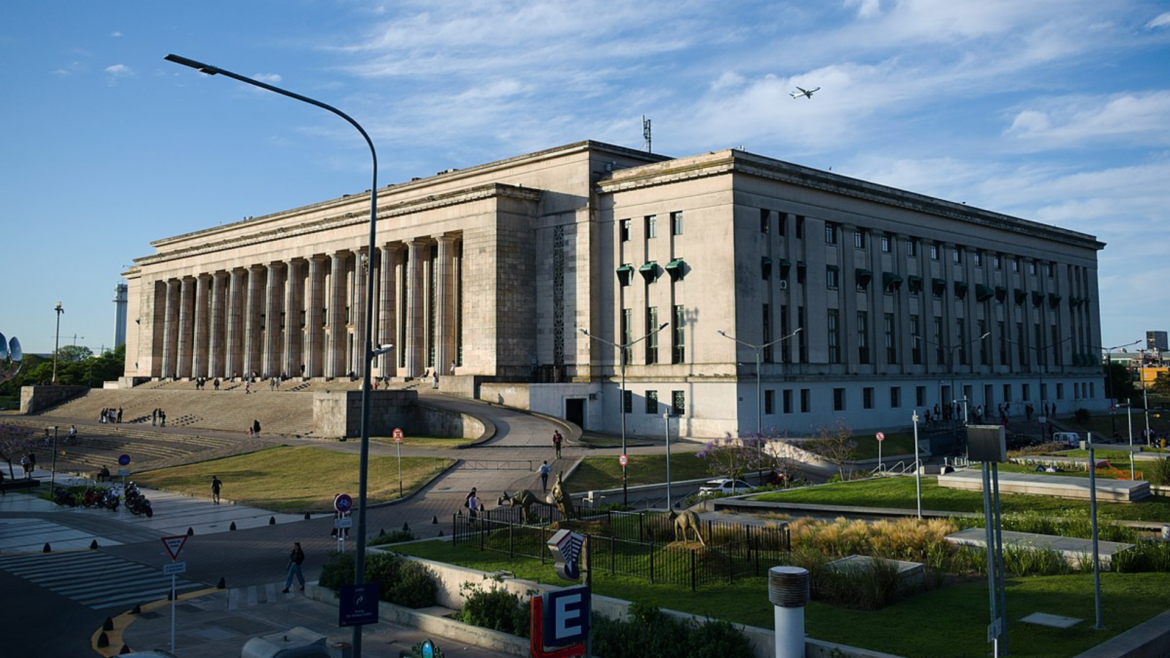
The Argentine government will allow universities and hospitals nationwide to charge non-resident foreigners, presidential spokesman Manuel Adorni said in his usual press conference. However, critics told the Herald that university students are already required to be residents to sign up for undergraduate degrees and that the number of international students in public universities is minimal.
“The goal of the measures is to move forward, as in all the measures we take, toward an orderly country and, in this case, a country that takes care of its borders and protects Argentine citizens,” Adorni said during the conference. He added that charging fees to non-resident foreigners will “represent a source of financing” for universities.
State universities have not charged students for undergraduate degrees since 1949. “Just to give an example: one out of every three medical students is a foreigner,” Adorni said.
However, a spokesperson for the National University of Córdoba (UNC) told the Herald that foreign students already need Argentine ID cards (“DNI” for their Spanish initials) to sign up for careers in national universities. Those ID cards are only issued to residents in Argentina, and foreigners usually get temporary residence permits (called precarias) before getting a definitive one. That means that there are no “non-resident foreigners” studying in Argentina.
There are two exceptions: exchange students who come “usually for a semester,” but the fees they pay are low enough to be considered “symbolic.” Another one could be the CBC, Buenos Aires University’s entry course, which international students can sign up for with their country’s ID card or their passports. However, once they are accepted into their degree of choice, they must present an Argentine DNI.
The UNC spokesperson added that university authorities are not planning to charge international students, and that, even if the government’s announcement were applicable, universities would be allowed, and not forced to, charge them. “Universities are autonomous,” the spokesperson added. “The government is diverting the discussion. The issue that worries the universities is what budget they will have next year.” A series of austerity measures implemented by the Milei administration have hit public universities hard, sparking nationwide protests and months of tensions.
Adorni added that the government aims to ” end free medical care for foreigners,” including “national, provincial or municipal agencies.” He added that the province of Salta, which borders Bolivia, is charging foreign patients, and “the number of foreigners treated was reduced by 95% and a savings of AR$60 million was generated.”
Yamila Pereyra, a social worker from the Bonaparte Hospital, said that the health center’s authorities have not released an official communiqué on the topic. “There has never been any refusal to treat foreigners; we have always treated every person without restrictions regardless of their immigration status in the country,” she added.
Rodolfo Arrechea, the Health Secretary for the state workers’ union ATE, told the Herald that they always supported “universal health care,” and that a patient’s nationality is not a factor. “In Buenos Aires, there is a percentage, albeit minimal, of foreigners [that use public hospitals,] but they are a vulnerable population,” Arrechea said. The union leader said the government is trying to make excuses, as it is defunding hospitals and looking for “the state not to be present.” “[Foreigners going to public hospitals] do not move the needle, but that person is going to stop going to the hospital, and you can buy yourself a bigger health issue — for example, cases of tuberculosis or HIV.”
Adorni said both changes will be made by modifying the immigration law. He added that the reform will also “incorporate more crimes as causes to prevent entry or as justification to expel an immigrant from the country.”
“Therefore, if a criminal is caught in flagrante delicto, that is, if he is caught committing the crime or if he is arrested for violating the democratic system, attacking the institutions, for example, he will be expelled and will be prohibited from re-entering the country,” he said.
Three weeks ago, Federal Judge Daniel Rafecas requested the arrest of 61 Brazilians living in Argentina who were convicted in Brazil for participating in the January 2023 storming of government buildings. Four have been detained so far.
