
 Martina Jaureguy
 Diplomats from over 30 embassies in Argentina have signed a rare joint statement warning of “growing hostility, disinformation and phobia” against LGBTQIA+ people five days ahead of the Buenos Aires Pride Parade.
“We firmly believe that free, inclusive and diverse countries will always be more prosperous, peaceful, and secure,” the embassies’ statement says. “We are certain that only free, pluralistic societies with equal rights for all are best placed to tackle current global and geopolitical challenges.”
Journalist and LGBTQAI+ activist Franco Torchia wrote on X that the release of the statement was “an unprecedented event in local diplomatic history.”
The statement was written as part of the Equal Rights Coalition, an intergovernmental organization dedicated to defending the human rights of the LGBTQIA+ community.
“The Diplomats for Equality initiative came to life in 2017 through the Canadian embassy in Vienna, and has been carried out in around 25 capital cities,” Justus Kemper, spokesman for the German embassy in Argentina, told the Herald. “In South America, Argentina is so far the only country in which such a statement has been published.”
The statement calls for support for the LGBTQIA+ community “in Argentina and around the world.” It does not refer to specific situations or government policies in Argentina.
Its publication comes 10 months after President Javier Milei took office. His government has closed the Ministry of Women, Genders and Diversity and state anti-discrimination watchdog INADI, among others. Milei and senior officials in his government have made offensive comments about the LGBTQAI+ community, and Argentina was the only G20 member country that refused to sign a gender equality statement earlier this month.
The approach has marked a sharp change in a country famed for its early same-sex marriage laws, hiring initiatives for trans people, and other progressive gender policies.
The document was published Monday on the website of the United States embassy in Argentina, and signed by the embassies of Germany, Australia, Austria, Belgium, Brazil, Canada, Chile, Cyprus, Colombia, Slovenia, Spain, the United States, Finland, France, Greece, Ireland, Israel, Lithuania, Mexico, Norway, New Zealand, the Netherlands, Poland, Portugal, Sweden, Switzerland, the United Kingdom, the Czech Republic, Ukraine, and the European Union Delegation.
“Human rights are for everyone, without exception: LGBTIQ+ people are just as entitled to protection,” the statement read.
Pride in Argentina
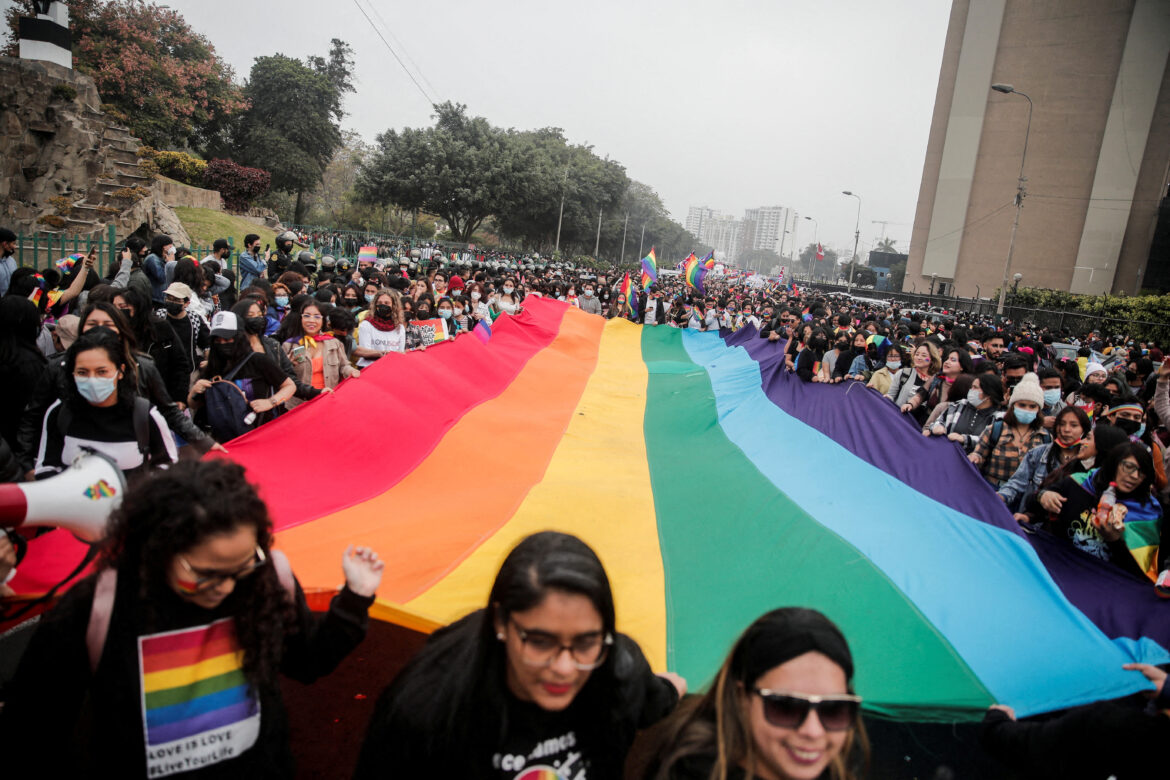
While the LGBTIQ+ international community usually celebrates Pride in June, Argentina’s annual march happens on the first Saturday in November to celebrate the creation of the first LGBTIQ+ organization, Nuestro Mundo, In November 1967. This year it will take place on November 2.
Even before he took office, Milei made it clear that he would not continue with the gender diversity and equality policies that were in place in Argentina until December 2023. As soon as he took office, he closed the Women, Gender and Diversity Ministry, which mainly focused on assisting victims of gender-based violence. He fired most of its employees, and cut funding to the remaining programs dedicated to these issues.
Milei also dissolved the National Institute against Discrimination, Xenophobia, and Racism (INADI, by its Spanish acronym) by decree in August, using exceptional powers granted to him by his Bases Law. Most of the institution’s employees were LGBTIQ+, disabled, or people of color.
Justice Minister Mariano Cúneo Libarona was left in charge of the programs and duties of the now-defunct Women’s Ministry after its closure. In late August, he dismissed women’s and LGBTQIA+ rights as “gender ideology” and called diverse sexual identities a “subjective fabrication” while speaking at the Lower House. “We reject the diversity of sexual identities that don’t align with biology,” he said.
In Milei’s first speech at the United Nations in September, he accused the international organization of promoting a “socialist” and “woke” agenda. The previous day, Foreign Minister Diana Mondino had announced that Argentina would not endorse a key UN pact that aims for member countries to commit to action on issues including gender equality.
On October 14, Argentina was the only member country that refused to sign a G20 gender equality and women’s empowerment statement put forward by Brazil.
Queer activists in Argentina have warned that such policies have created an enabling environment for attacks against the community. In May, a man set four lesbians on fire as they slept in a boarding house in the Buenos Aires neighborhood of Barracas. Three of them died of their injuries.
