
 Martina Jaureguy
 Argentina is headed toward another heated Wednesday, as the Lower House will debate President Javier Milei’s decree approving a new deal with the International Monetary Fund (IMF) while pensioners are set to lead a new protest outside Congress.
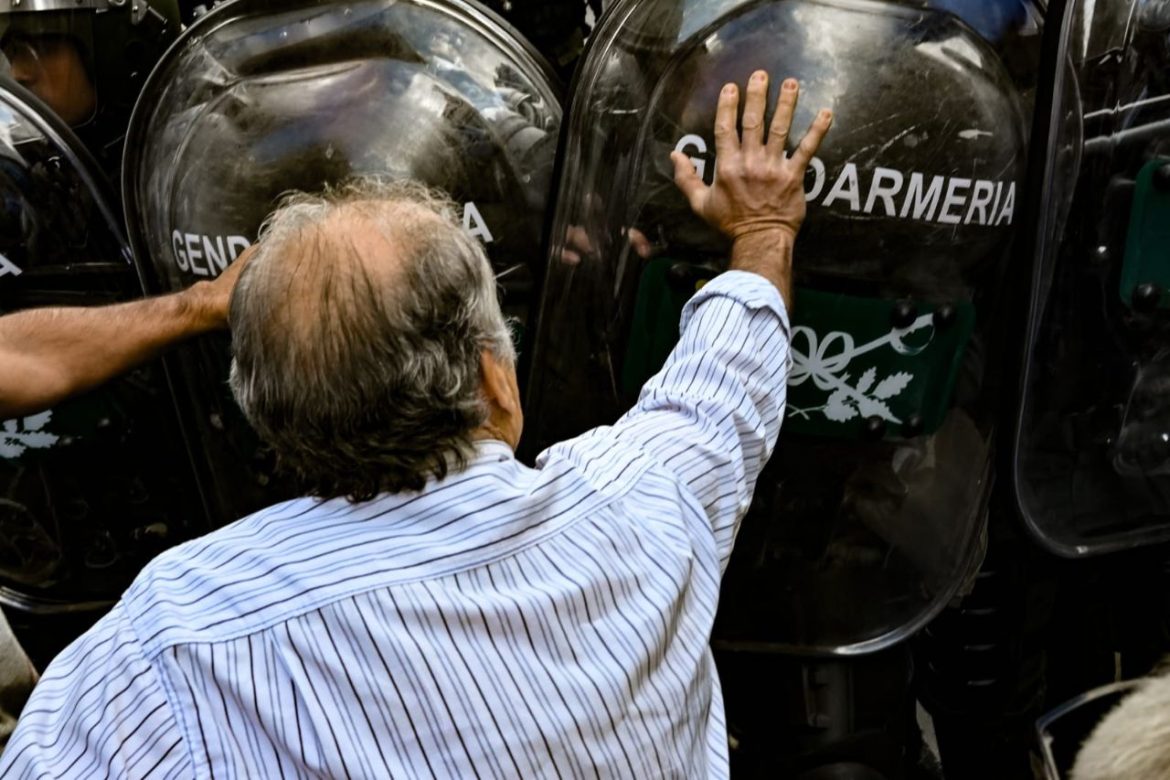
Following the violent crackdown last week against retirees, the government warned that security forces will respond to this march the same way.
“Protesting does not equal violence. Police will crack down on all attacks against the republic,” said a message seen on displays and heard in broadcasts across Buenos Aires train stations. The government has displayed messages questioning protests or union strikes in the past, but had never announced a police crackdown in this way.
Deputies are scheduled to have two sessions on Wednesday. The first, which began at 10:30 a.m., was called by ruling party La Libertad Avanza to debate the emergency decree with which Milei approved the IMF deal. If the Lower House approves the motion, the decree will stand, as Argentine law requires both chambers reject it for it to be struck down.
In the evening, another session called by the opposition will discuss the extension of a pensions moratorium that is close to ending, as well as bills that would ensure the provision of free medication for pensioners.
The protest outside Congress is scheduled to start at 5 p.m., with social organizations and football fans once again accompanying the pensioners’ demands. Retirees have been carrying out peaceful protests every Wednesday for months. Several ended with a harsh police response faced with small number of often elderly protesters.
A week ago, football fans called to attend the protest and thousands of people congregated outside Congress. Police and other security forces responded with a violent crackdown, using tear gas, rubber bullets, and riot control trucks to dissuade protesters. According to human rights organization Comisión Provincial por la Memoria, 672 people were injured as a result of the police operation. The Security Ministry said 124 people were arrested, but were let go in the early hours of Thursday.
Photojournalist Pablo Grillo suffered a serious head injury during the protest after he was hit by a tear gas canister shot by a military police agent. He underwent two surgeries and remains in intensive care. An elderly woman was also hit with a baton by a policeman, falling to the ground and hitting her head.
The security operation for Wednesday is expected to be even larger than last week. Buenos Aires City Police will deploy 900 officers, and there will also be around 2,000 agents from the federal, military, navy and airport police.
Federal judge Martín Cormick will be present at the protest to guarantee Bullrich’s anti-protest protocol is carried out without police abuse. On Monday, he rejected a request made by human rights organizations to suspend Bullrich’s security guidelines.
On Wednesday, the Security Ministry announced a AR$10 million reward (around US$7,700 at the MEP rate) for people who provide information on “the unruly” that “attacked security forces and caused havoc around Congress with sticks, weapons and stones” last Wednesday. The reward also stands in case this Wednesday’s protests also become violent.
Starting at 9 a.m., traffic was prevented from entering the blocks surrounding Congress. The blocked area is between streets Paraná/Sáenz Peña, Bartolomé Mitre, Ayacucho/Sarandí, and Adolfo Alsina.

You may also be interested in: UN urges Argentina to investigate crackdown at retiree march
Cover photo: Courtesy of Gustavo Molfino
