
 Buenos Aires Herald
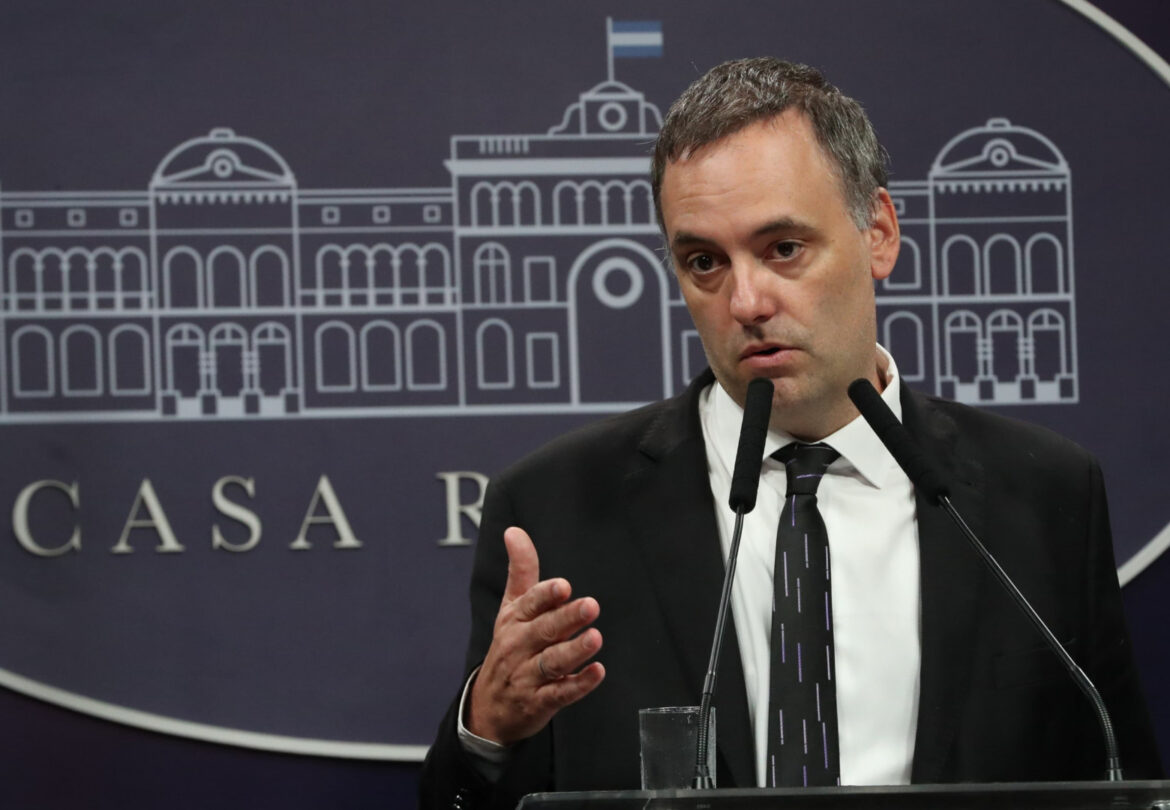
The Milei administration issued a decree on Friday imposing harsher restrictions for journalists who wish to attend presidential spokesman Manuel Adorni’s press conferences and cover official activities within the presidential palace.
Among the list of restrictions, the government will now demand that outlets wishing to cover such events meet a series of requirements listed in what they call an “Objective Evaluation Matrix.” Before being accepted, media organizations will be judged according to criteria such as total viewership, online interaction, previous institutional coverage, and quantity of specific political coverage, among others.
The new law also mandates that journalists wear formal dress, expands the areas considered private and therefore off limits for reporters, and requires potential attendees to present a sworn statement acknowledging they will follow the rules.
The administration also determined that press conference speakers or moderators will be allowed to determine the time devoted to each question with the goal of “maintaining order or fostering debate.” The number of journalists allowed in the conference room and an adjacent facility at any one time has been cut to 25 and 36, respectively.
Repeated incidents with the press
The decision comes on the heels of a harsh police crackdown during a retiree protest in which several journalists and photographers suffered police brutality. According to press freedom watchdog FOPEA, three photojournalists were arrested while covering the protest. All have been released.
Two more photographers and a La Nación + cameraman were tear gassed, while a LN+ reporter was hit by a rubber bullet.
FOPEA condemned police actions conducted under Security Minister Patricia Bullrich’s anti-protest protocol, which have been criticized by many human rights organizations.
“The state has the constitutional obligation to take precautions before and after public protests in order to protect journalists,” they wrote on social network X. They also called on the city and national governments to discipline the officers involved in the incidents.
Tomás Cuesta, one of the photojournalists arrested, was present at the protest in order to document how security forces implement the anti-protest protocol for Amnesty International Argentina. The NGO also put out a statement saying that journalism is “key to exposing power abuses and demanding that those responsible for institutional violence be held accountable.”
Press room disputes
In a separate incident on Thursday, Economy Minister Luis Caputo was involved in a spat with El Destape journalist Jon Heguier during the press conference announcing the decision to allow informal cash into the financial system.
Heguier asked Caputo if government ministers would “set an example” and inject the money they have abroad or “under the mattress” into Argentina’s financial system, adding that the minister was someone in this position.
Caputo took offense at the question and accused Heguier of being “disrespectful” for implying that he had undisclosed assets. He went on to say that he has assets abroad, but that everything is above board.
The government’s attitude towards the press is drawing in criticism from multiple sectors. On Friday, 16 lawmakers from different parties, including Martín Lousteau (UCR), Silvia Lospenatto (PRO), and Victoria Tolosa Paz (Unión por la Patria), published a statement titled “25 de Mayo and a democratic commitment in defense of freedom of press.”
In the letter, they expressed concern over President Javier Milei and his followers’ “disqualifications, insults, and even criminal complaints” against journalists, calling these a way to undercut what they’re saying.
