
 Martina Jaureguy
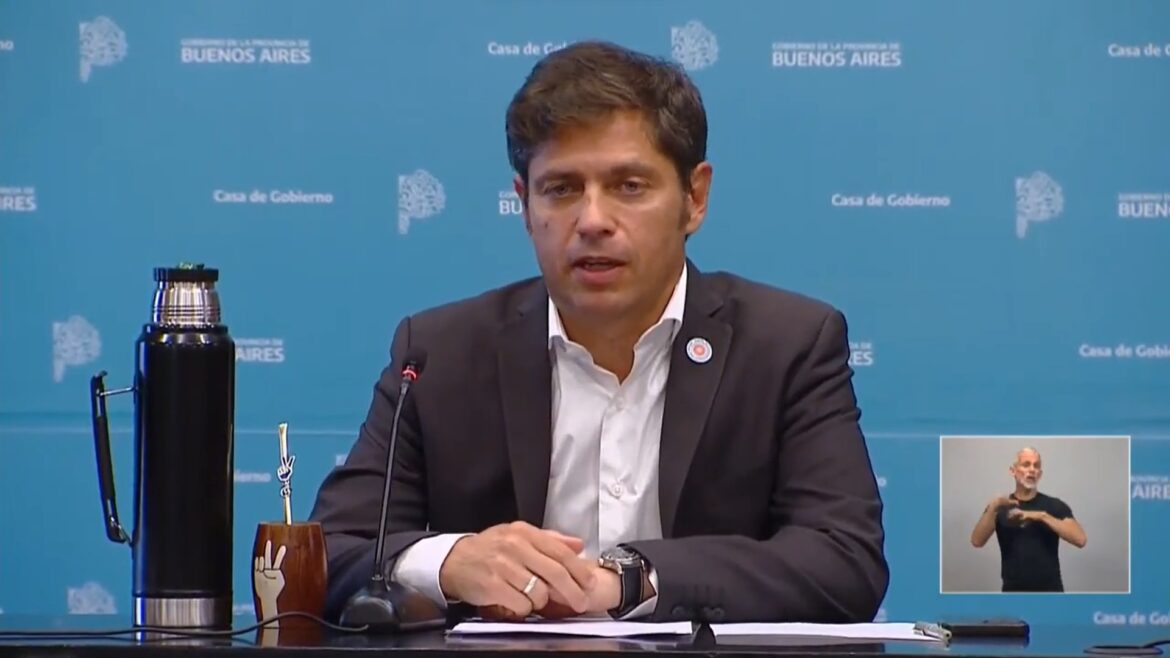
 Peronism could be facing a schism after Buenos Aires province Governor Axel Kicillof decided to hold provincial elections on a separate date from the national legislative ballot.
On Monday, Kicillof announced the province will hold its legislative elections on September 7, over a month before the October 26 national vote. He said he was splitting the two elections because voters will use so-called “single-paper ballots” that list all candidates on one sheet for the national election, while the province still uses separate ballots for each party.
Kicillof argued in an X post that requiring voters to cast two ballots that follow different systems on the same day would cause “chaos,” affecting citizens’ right to vote. He also criticized President Javier Milei for pushing the new system.
Still, the governor’s decision is perhaps most significant for defying the wishes of long-time mentor and Peronist party president, Cristina Kirchner. And after months of simmering tensions, some have begun to question the direction of Argentina’s opposition.
An unprecedented breakup
“This could cause a breakup within Peronism, assuming that hasn’t already happened,” said Mariano Fraschini, a politics lecturer at the University of Buenos Aires and the Latin American Faculty of Social Sciences.
A full-on rupture between Kicillof and Kirchner would constitute the first breakup within Kirchnerism — the sector of Peronism aligned with Kirchner and her husband, Nestor — since its foundation in the early 2000s. Until now, Kicillof has been considered a Kirchnerist leader: Fraschini noted that the Buenos Aires governor was Cristina Kirchner’s economy minister during her presidency. She also endorsed his camapigns for governor in 2019 and 2023.
“If the party’s president has a strategy and the governor defies it, he’s defying the party’s leadership,” Fraschini said.
The dispute
Kirchner’s allies believe that if both elections are held the same day, they will pit Peronism against Milei — a choice they feel would win them more seats in Congress, according to Fraschini. By splitting vote, they argue that Kicillof is weakening the opposition’s chances “by holding an election in which only provincial positions are at stake.”
The dispute between these two factions boils down to who controls Peronism.
“Leadership of Peronism is at stake, and it could have an impact on the elections,” Fraschini said. “This is more than just an internal dispute.” Kirchner is expected to run in this year’s midterms, but it remains to be seen whether she will stand for the national or provincial legislature.
Argentina’s next presidential elections are in 2027, and Kicillof is a strong contender.
“If Kicillof runs as Cristina’s candidate, it takes away his autonomy and puts him in an uncomfortable position,” Fraschini said. Kirchner handpicked President Alberto Fernández and served as his vice president before ultimately turning on him.
“On the other hand, Kirchner wants to hold on to her political leadership,” he explained, pointing out that her strategy could be to run herself in 2027.
Kicillof wasn’t alone in pushing for a split election. In late March, 44 Peronist mayors across the province signed a document asking the governor to hold the provincial vote on a separate date.
Twenty-seven mayors from the centrist Unión Cívica Radical Party issued the same demand. Days later, hundreds of Peronist lawmakers, mayors, and local leaders aligned with Kirchner called for provincial and national elections to be held on the same date.
