
 Martina Jaureguy
 The Buenos Aires City legislative elections are just around the corner. Porteños will head to the ballot boxes on Sunday to vote for local lawmakers, renewing half of the 60 seats in the city legislature.
Here’s what you need to know about who’s on the ballot, what they’re running for, and how the results could change Argentina’s political landscape.
What is Buenos Aires voting for?
Voters are renewing half of the seats in Buenos Aires City’s legislature. These are local positions, so the lawmakers will not sit in the national congress or vote on national laws.
At the top of each ticket is a head candidate, whose name and photo is visible to voters. That candidate leads a list of 30 candidates. They won’t all get a seat: the number assigned to each list depends on what proportion of the vote they get.
None of the head candidates will become mayor because that position is not up for election. Jorge Macri, the current mayor, was elected in 2023 and will serve a four-year term. However, the results could shift the balance of power in the city legislature.
Each party or coalition gives its ticket a name. The name of the ticket is different from the name of the party.
Who are the candidates?
Leandro Santoro will lead the center-left Peronist ticket, which will run under the name Es Ahora Buenos Aires. Originally a member of the centrist Unión Cívica Radical (UCR) party, he is now a recognized Peronist leader in Argentina’s capital. In 2023, he came second in the electoral race for mayor of Buenos Aires, with 32% of the vote.
The Peronist list has not come first in Buenos Aires City since it became an autonomous district in 1994. However, this year their rivals from PRO and La Libertad Avanza (LLA) are competing for a similar electorate. This could divide the vote, creating an opening for Peronism. Several recent polls have placed Santoro’s list first.
Silvia Lospennato will head the PRO party ticket, “Buenos Aires Primero.” PRO, led at the national level by former President Mauricio Macri, has ruled Buenos Aires for the past 18 years. It currently controls almost half the legislature seats that are on the ballot.
Ruling party LLA’s lead candidate is President Javier Milei’s spokesperson, Manuel Adorni. Over the past year and a half, he has become a familiar face via his morning press conferences and could help LLA gain ground at the local level.
Former Buenos Aires Mayor Horacio Rodríguez Larreta is running with his new party, MAD, on the “Volvamos Buenos Aires” ticket. He co-founded PRO with Macri in 2007 and ran in the 2023 presidential primaries. However, he left the party following a crushing loss to Patricia Bullrich for the presidential nomination and disagreements about the party’s close relationship with Javier Milei.
Another candidate with a shot at the top five is Ramiro Marra, a Libertarian who is already a city lawmaker. He was ejected from LLA in January after voting in favor of increasing taxes.
You may also be interested in: Buenos Aires City election candidates: who is who?
How many candidates are there?
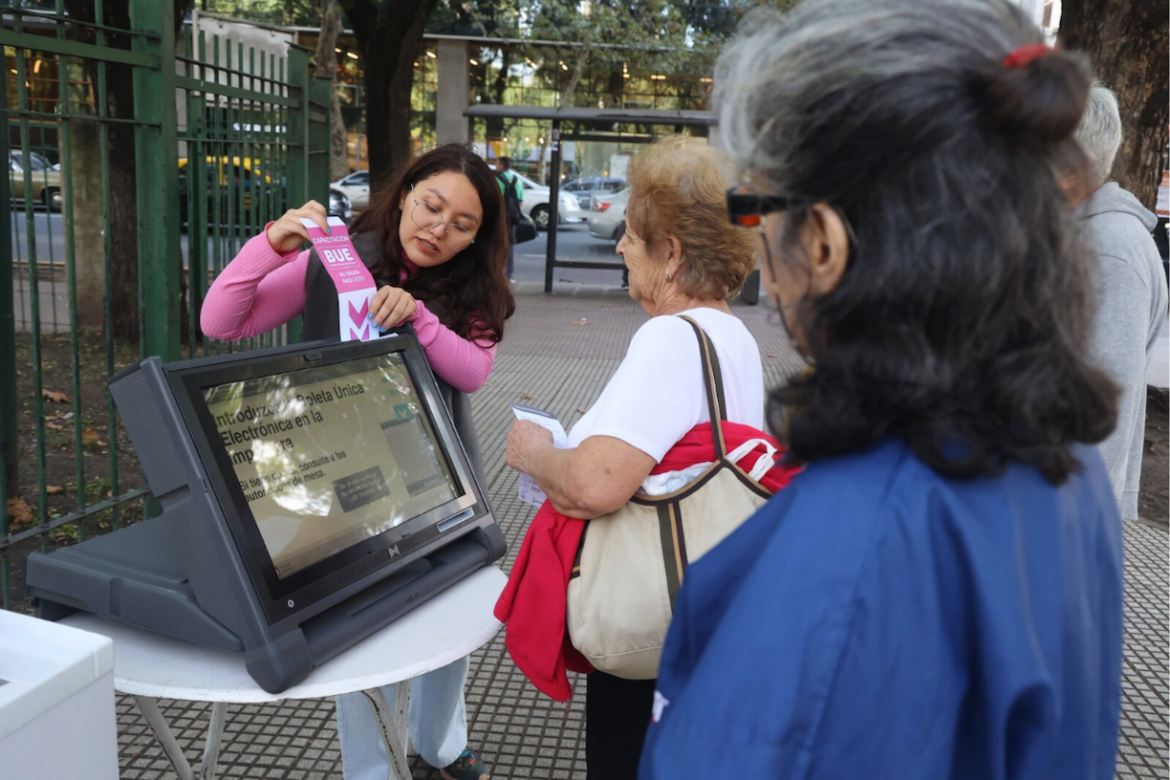
The electorate will find 17 different lists on the electronic ballot. This is “unprecedented,” according to Dr. Ariadna Gallo, a political science researcher at Argentina’s National Scientific and Technical Research Council (CONICET, by its Spanish initials).
“The legislature is already very fragmented, and in this election we find a matching level of fragmentation in the candidates,” Gallo said.
The large number of candidates is partly down to the suspension of this year’s primary elections, meaning some lists that might otherwise have been weeded out earlier are still in the race. Larger coalitions splitting up and running on separate platforms has also contributed to the plethora of tickets, according to Gallo.
Why is Buenos Aires City holding elections now?
Unlike previous years, the local election is being held separately from October’s national vote. In Argentina, holding local and national elections separately is known as desdoblar (split).
Governors may choose to split the elections because they fear that the national electoral debate will drag their party down in the polls, and it can be a highly controversial decision.
What’s at stake in these elections?
This election will be a test of PRO’s dominion in Buenos Aires. Nationally, the party is a key ally of La Libertad Avanza (LLA), but in the capital, the two failed to reach an agreement and will run against each other.
“A Santoro win would be a relief for Peronism, which has recently performed badly in elections,” Gallo said. Moreover, Peronism has never won an election in Buenos Aires since it became an autonomous district in 1994.
If PRO gets more votes than LLA, it will put them in a better position to negotiate for places on future election tickets, according to Gallo. But, she continued, if LLA does better than PRO, “it will be PRO’s coup de grâce.”
You may also be interested in: Crying cats: what’s really behind Buenos Aires’ legislative election lists?
