
 David Correa
 In early October, the remains of Benito Vicente Romano, a prominent leader of the sugar workers enrolled in Tucumán’s once-powerful FOTIA union, were identified and handed over to his relatives by the Argentine Forensic Anthropology Team (EAAF for its Spanish initials). Romano was a victim of the last civil-military dictatorship, and his family had to wait 48 years to be able to bury him.
“His kidnapping and murder was a catastrophe for our family because he was everything. Now we are at peace, but we still lack answers,” his nephew of the same name told the Herald’s sister publication Ámbito.
Romano was born in Delfín Gallo, a small town in eastern Tucumán, 15 kilometers from the province’s capital, and was the eldest of nine siblings. At 15 years old, he joined the Esperanza sugar mill, around which the town had grown with entire families of rural workers migrating there for jobs. An avid reader with only an elementary school education, at 17, he was elected as a delegate for Tucumán’s Sugar Industry Workers’ Union (FOTIA, for its Spanish acronym).
As one of the youngest union leaders in the country, he received a medal from then-First Lady Eva Perón. According to his family, he was already a supporter of Peronism, and this recognition drove him to further embrace its values.
He went into exile in Bolivia following the 1955 coup, returning to join the “Peronist resistance” campaigns. In 1959, he was elected general secretary of FOTIA and began to gain notoriety in the region. He was imprisoned for a year in 1961 after a 43-day railroad strike.
Romano returned to political union activity after his release and was elected national deputy in 1962, but his tenure would be brief due to the coup against Arturo Frondizi.
“My uncle was everything to our family, he was the idol of his nephews and admired. He was a great autodidact. He read a lot which is why he presented interesting bills in the Chamber of Deputies for the benefit of workers,” said 59-year-old Benito Vicente Romano, a nephew who shares the name.
In 1965 he was elected national deputy a second time, using his position to decry the serious economic crisis in Tucumán. The Esperanza sugar mill, where he was still working, was shut down — FOTIA workers took over the mill as a cooperative and reopened its doors in 1966. But that unprecedented victory was short-lived: in June of that year, following another coup, Esperanza was one of 11 sugar mills in the province ordered to close its doors for good. Fifty thousand workers were suddenly unemployed, including Romano.
In response, he redoubled his FOTIA efforts and joined the General Confederation of Workers (CGT by its Spanish acronym) of the Argentines. At the time, the national union had split in half, with CGT de los Argentinos on one hand and CGT Azopardo on the other. The latter was more ideologically conservative and maintained a dialogue with the dictatorship. Romano found his place in the CGT de los Argentinos, a space that was integrated by different ideological currents that included left-wing Peronism, sectors of Marxism, and militant Christian organizations. He eventually became the general secretary of its Tucumán branch.
“By that point, Romano was already an important national leader and a bridge between generations. He had influence with sugar workers but also over the student movement, which he accompanied in their protests”, said Dr. Silvia Nassif, who researched sugar workers’ resistance to dictatorships and Romano himself for her history PhD.
In 1973, when democracy was reinstated in Argentina following the end of the military dicatorship that had come into power in 1966, Romano managed to have the assets of the Esperanza sugar mill transferred to CONASA, a company in which the state was the majority shareholder. He sat on the board of directors as a labor representative. While the brutal repression of the “Operativo Independencia” was raging in Tucumán, the sugar workers obtained the enactment of Decree 2,172, by which CONASA was authorized to reopen the Esperanza sugar mill. Romano had finally achieved one of his most sought-after objectives and had even met with Juan Domingo Perón and Isabel Martínez to get it.
At the time, his family home in Delfín Gallo was the epicenter of meetings: Romano did not hire security guards and insisted on living as a “common worker.”
“I was a kid, but I remember people lined up on the sidewalk to meet with my uncle, who had great patience and attended to everyone. They always left with some solution to the problems they brought to him. He was well-liked and respected. And he asked his brother Antonio, my dad, to name a son after him. My old man told me that he did not hesitate for a second,” said Benito Romano, the 59-year-old nephew.
The sugar cane leader for whom he was named had no wife or children, devoting his life to union and political activities. Romano maintained close ties with other important leaders, both from Tucumán and the rest of the country.
“He did not hesitate to meet with men with whom he did not fully agree ideologically because the most important thing was to achieve the unity of the workers’ movement. Through this approach, he was given the opportunity to speak on behalf of the workers before the International Labor Organization (ILO),” Nassif said.
The reopening of the Esperanza sugar mill seemed on track to becoming a reality. But before it could be kicked into gear, the March 24, 1976, coup took place. A mob entered the Romano family home to take Benito away. When they did not find him, they ransacked the house and took his brother, Francisco. In 1978, another one of his brothers, union leader and Peronist militant Domingo, was also forcibly disappeared.
Disappeared and returned
Benito Romano traveled to Buenos Aires City a few days after the coup. He booked a room at the Splendid Hotel on Rivadavia Avenue, where FOTIA leaders usually stayed, trying to get information on his brother Francisco, who would be released a few weeks later. On April 14, 1976, an armed group entered the hotel and kidnapped Romano, who at the time was 47 years old. Despite being a well-known figure and that his abduction had sparked a large commotion as many tried to find out what happened to him, he was never heard from again. Until this year.
On April 25, eleven days after Romano disappeared from the Splendid Hotel, a body was found with several bullet wounds near the Luján River. The victim was apparently killed in an execution-style shooting. He was buried as a John Doe in a municipal cemetery in Escobar, Buenos Aires province, his death certificate marked Number 115.
Due to testimonies in several trials for crimes against humanity, the Argentine Forensic Anthropology Team (EAAF) carried out the exhumation of bodies in that Escobar cemetery in early August 2010. They found the remains of 13 people. Four years earlier, Romano’s relatives had left blood samples at the National Genetic Data Bank with the hope of finally finding him.
“My uncle’s disappearance was like an atomic bomb dropped on the family, a disaster that caused a lot of pain. My dad would wake up at night crying. He went from being a cheerful guy to someone with a deep sadness. For years my grandmother had clothes ready for when my uncle returned. And then there’s what happened to my other uncle. Everyone did what they could. We moved to Buenos Aires, where my father got a good job. The family split up,” Romano’s nephew recalled.
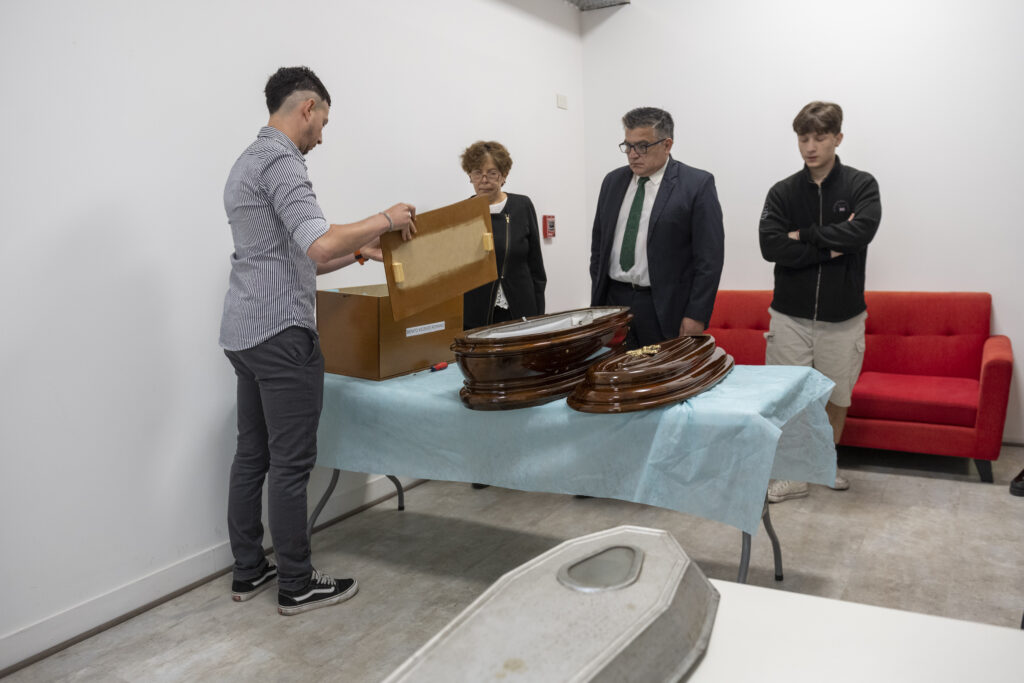
According to the EAAF, of those 13 remains exhumed in the Escobar cemetery, six were identified by applying state-of-the-art methods to obtain new genetic markers. The last positive identification happened in mid-October — the EAAF called the Romano family to let them know that the body found near the Luján River belonged to their beloved Benito Vicente Romano, 48 years after the last time he was seen.
“From that moment, I’ve been flooded by memories which have brought on sadness for all that I suffered, but the most important thing is that now we are at peace,” his nephew told Ambito.
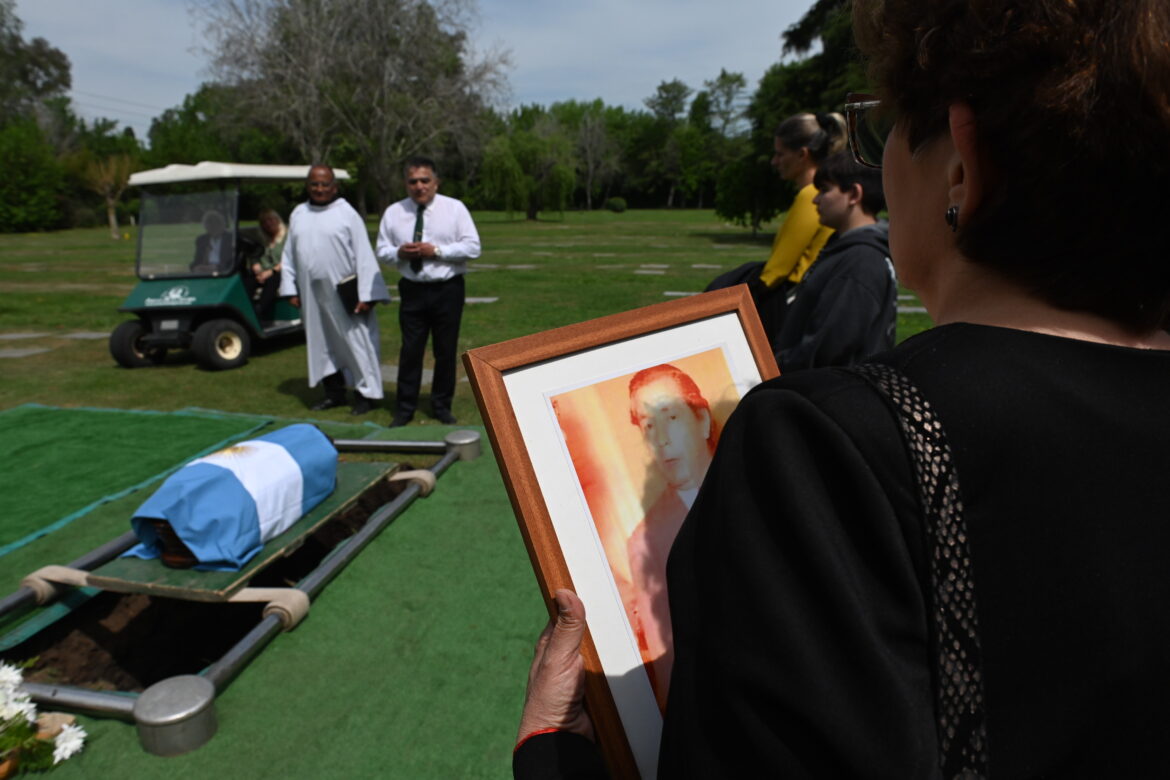
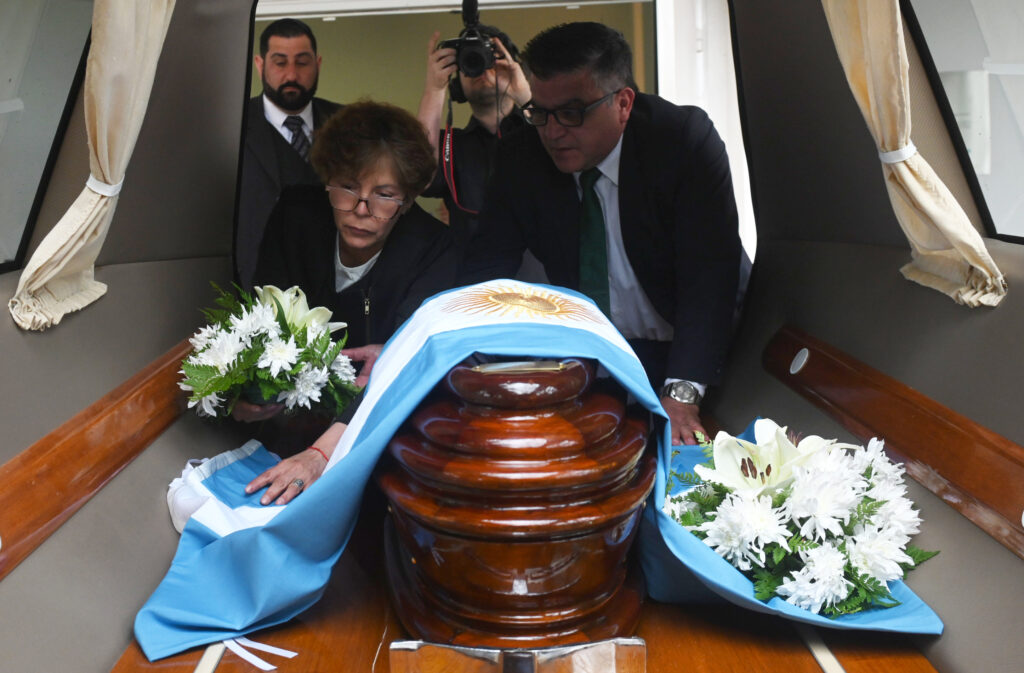
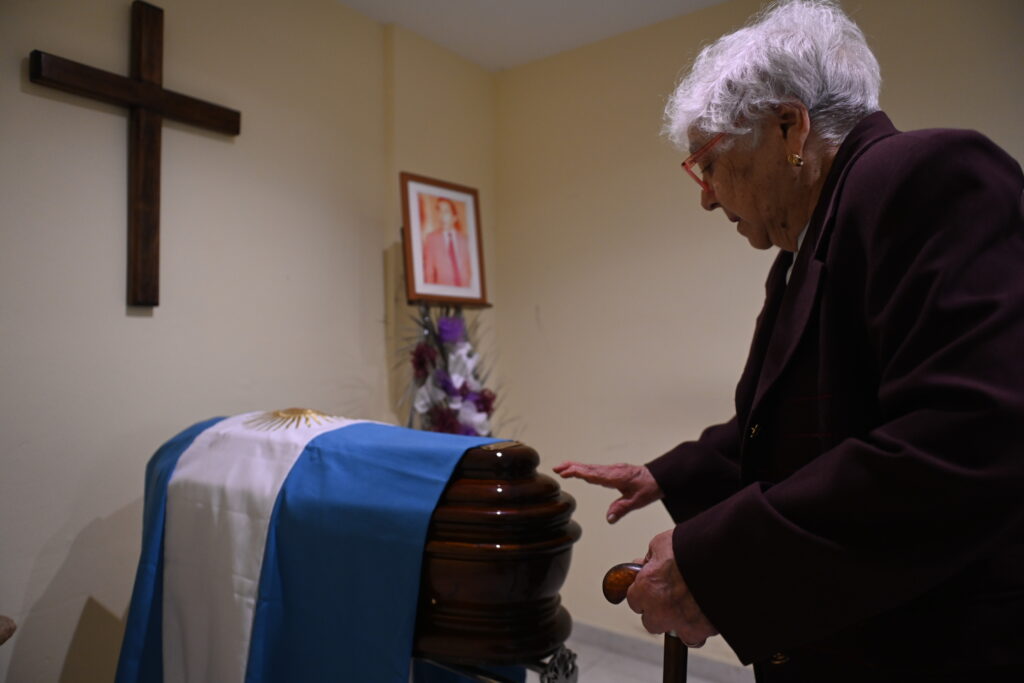
Once the remains were returned to the family, Romano told Ambito that he and his sister did not hesitate to choose the date for their uncle’s reburial: October 17, known as the Day of Peronist Loyalty. Romano was finally laid to rest next to his brother, Antonio, in the Parque de la Gloria cemetery in a simple but emotional ceremony. Various union leaders and Buenos Aires Province representatives were there, but none from FOTIA nor Tucumán’s Peronist leadership.
“To think that my uncle was one of those who consolidated and made FOTIA powerful. It seems that its members have forgotten him,” Romano said. “But we did not give their absence much importance, that is nothing considering what Benito was. I carry his name with pride.”
Cover photo courtesy of the Argentine Forensic Anthropology Team
