
 Piotr Cieplak
 “Lights and appliances turning themselves on and off… vehicles starting on their own… voices, screams, laughter, whispers, moans of untraceable origin.”
This is not the beginning of a fictional horror story but just a few of the supernatural phenomena explored in a recent book approaching Argentina’s most recent civic-military dictatorship from a novel and unexpected angle.
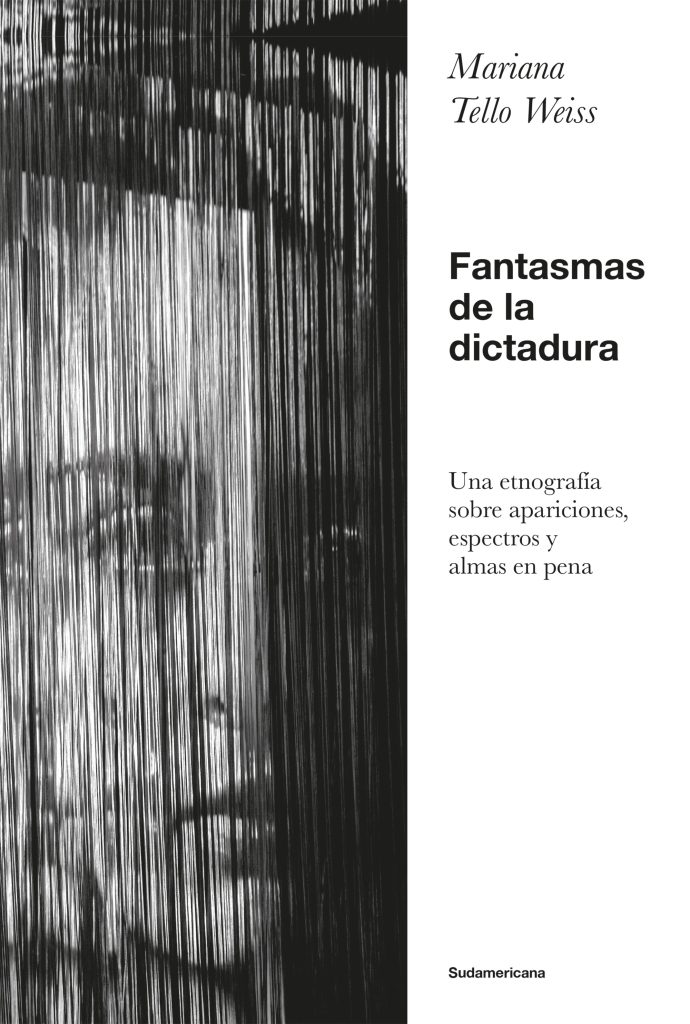
Fantasmas de la Dictatura: Una etnografía sobre apariciones, espectros y almas en pena (Dictatorship ghosts: An ethnography on apparitions, specters, and lost souls) is an exhaustive ethnography written by renowned anthropologist Mariana Tello Weiss that looks into the role that ghosts, apparitions, dreams, and the supernatural play in people’s relationship to the country’s dark past.
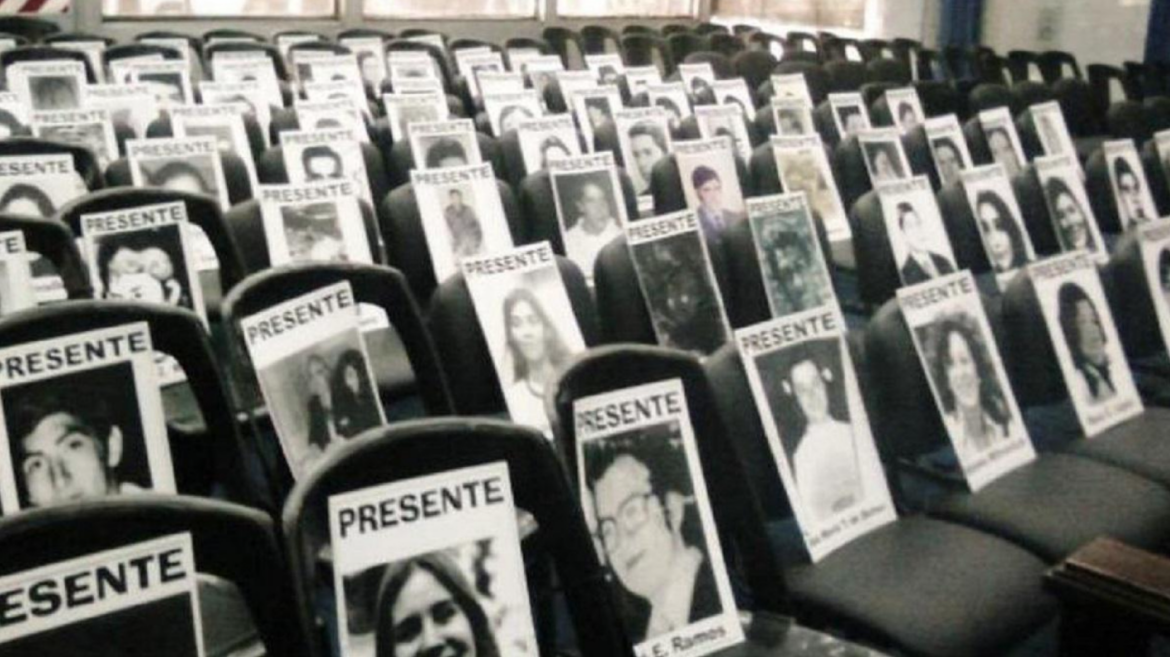
It is estimated that 30,000 people were disappeared by the Argentine dictatorship between 1976 and 1983. Most were later buried in anonymous, unmarked graves or thrown into the river or the sea from the so-called death flights. The lack of bodies or information about their fate resulted in many families and friends being unable to perform the usual rituals associated with death and mourning — such as holding a funeral or having a grave.
In the book, Tello Weiss explores phenomena like visions, premonitions, vivid and prophetic dreams, séances, visits to mediums, and other experiences that are difficult to explain within the realm of the rational. It is, however, equally impossible to dismiss them as the lived experiences of many people touched by dictatorial violence and those who work at or live near places where terrible deeds were committed.
How to deal with senseless violence
The Herald asked Tello Weiss about the meaning of the sentence on the back cover of the book: “In a country where the dead can’t rest, the living can’t rest either.”
“Just think of the phrase on many tombstones: Rest in Peace,” she said. “Is that an order, a wish, or a desire?” Tello Weiss added that when there isn’t an identified body, a proper burial, and, consequently, the possibility of mourning, things can get complicated for the dead and the living alike.
She pointed out that this is the basis of most horror stories: the dead returning because of what happened to them when they were alive, or because of the manner of their death. They demand to be buried properly. And until they are, the living are unlikely to get any rest themselves.
Tello Weiss explained that in a country where this form of killing and disposal of bodies was so widespread, “it becomes a problem for all of society, not just an individual family.”
As well as being an anthropologist, Tello Weiss spent nine years working at the former detention, torture, and extermination center La Perla in Córdoba. Between 2019 and 2021, she was also the president of the National Memory Archive, headquartered on the grounds of the former ESMA in Buenos Aires. Her experience working in these places played a big role in the decision to focus on ghosts and other supernatural phenomena.
“During my research and work at memory sites, so many people talked and asked about these occurrences and shared their own experiences.”
Tello Weiss said that her own encounters were also “impossible to ignore.” The cold spots. The strange atmosphere in these spaces after dark. Light switches and electric appliances coming on and going off unprompted. These are not only her experiences but also those of many visitors and some employees of Argentina’s memory sites — most of which are former clandestine detention centres — whom she interviewed.
Tello Weiss hopes the book “will legitimize talking about it.”
“I took notes and documented all these stories but, for a long time, I didn’t know how to analyze them. Framing the topic of ghosts within a rigorous academic context was difficult,” she said.
The author added that anthropologists generally love ghosts, magic, and rituals, but usually in cultures perceived as distant or more “primitive.” However, they find it much more problematic to talk about this in relation to Westernized, “advanced,” and “rational” societies closer to home.
One of the many strengths of the book is that it is not about whether ghosts exist or not. Instead, Tello Weiss investigates what their presence — real or imagined — generates in people who are very much alive.
“Ghosts exist in the sense that they have an impact on the living,” she said.
Parts of Fantasmas de la dictadura are written from a personal and deeply touching perspective. Tello Weiss’ mother, Margarita Susana Azize Weiss Esber de Tello, known to her loved ones as “Azizita,” was murdered in 1976 by members of the 5th Infantry Brigade of the Army and the Provincial Police of Tucumán. Tello Weiss was 10 months old and was briefly appropriated by the authorities before being reclaimed by her family.
“I didn’t feel like I could withhold my own experience of the dictatorship,” she replied when asked how these tragic events influenced her work on the book. She also stated that the idea of objectivity in scientific research is both important and a myth.
“I think objectivity is achieved through reflection and honesty.”
Tello said that, in a book like this, it would have been dishonest not to mention these events and analyze their impact. Not only because of what happened to her and her mother but also because Tello Weiss’s interest in ghosts, in many ways, began at home.
“My aunts organized séances to contact my mom, and she occasionally paid a visit.”
Whispers around La Perla
Fantasmas de la dictadura is based on rigorous academic research, including twenty extensive interviews and over a decade of fieldwork. Among the many stories her interviewees shared with her, Tello Weiss pointed to one specific experience that had a great impact on her.
“The last story in the book, called One Eighty,” she said, adding that the number refers to the normalized and recommended depth in meters of graves dug by the perpetrators to bury their victims.
Tello Weiss’ source and interviewee for this part of the book, Andrés Quiroga, was a child in 1977. He lived near La Perla. While walking one day, he made a grizzly discovery: a severed human hand in a lime kiln. It was a horrific experience, but he was told not to talk about it, and so he didn’t. Not until 2013.
It was widely suspected that the military used the vast 17 hectares of training ground inside the compound to bury some of their victims or perform executions. But locating graves proved difficult, not only because of the vastness of the area but also because the land was used for military maneuvers and thus full of explosives.
Tello recounts that Quiroga “adopted” the dead of La Perla and felt a strong connection to them. He told her that, as he walked the land, he could “hear” them encouraging him to speak out, telling him they didn’t want to be where they were and that they wanted to be found. And he did speak out. Even though what he witnessed happened more than 35 years prior, his testimony in 2013 resulted in the finding of the first remains of four people on the military grounds surrounding La Perla.
Soon after, Quiroga stopped hearing the pleas of the dead.
It is indeed a powerful example of the kind of work Tello Weiss undertakes in the book but also one that’s representative of a wider dynamic she analyzes. Namely, the crossover between the ghostly and the material; the different ways in which people’s relationships with the supernatural have an impact on the real world.
Dictatorship-related research and memory politics in general are currently under attack in Argentina. They seem to have become the latest front of the culture war waged by President Javier Milei’s government and its supporters.
Even though Tello Weiss is well attuned to the supernatural, she said that she’s not in the habit of prophesizing the future of investigation into the dictatorship’s crimes. She added that Argentina had 25 years in which the study and culture of memory have established themselves as important parts of the national discourse.
“Hopefully, that’s not easy to erase,” she said.
But Tello Weiss also voices a note of caution. She sees these constant attacks as part of an attempt to reshape society in a particular way.
“If someone maintains that there are ‘others’ that can be eliminated, then actually eliminating them is just one step away.”
The need to learn from history is more prescient than ever in Argentina. And Fantasmas de la dictadura is an excellent and important contribution to this task. Not only because it makes a compelling argument for thinking about alternative approaches to how people deal with traumatic pasts, but also because it shows the complexity of mourning and the long-term, multigenerational impact of what happens when the state turns on its people.
