
 Facundo Iglesia
Economists and opposition lawmakers are warning that an executive order sanctioned on Monday is paving the way for the government to restructure debts in foreign currency without going through Congress, something that was mandatory under the previous legislation.
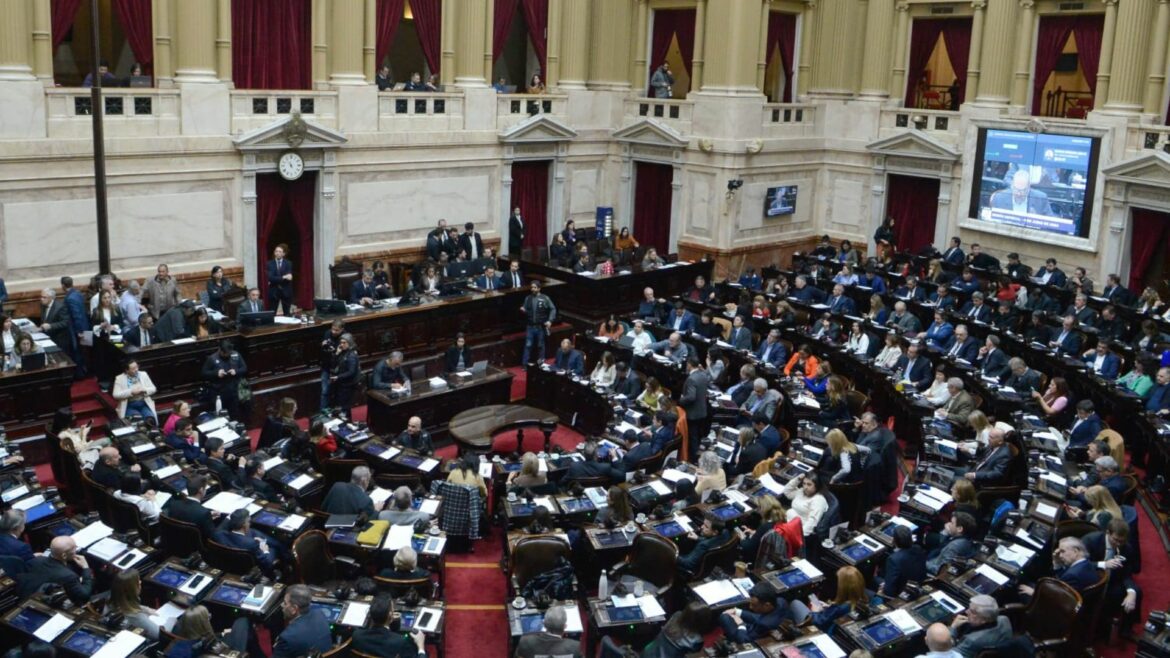
Meanwhile, the Peronist bloc in Congress are readying themselves to repeal the decree.
Decree 846/2024 modifies a previous decree from 2022 allowing public securities issued in Argentine pesos to be paid with other public debt instruments at their technical value without resorting to Congress. The new executive order, signed by President Javier Milei, Economy Minister Luis Caputo, Deregulation Minister Federico Sturzenegger and others, modifies it to allow debt swaps for bonds in any currency and at market rates.
“What this generates is the strong suspicion that, given the impossibility of accumulating international reserves due to the current economic scheme, the government is looking to push down the maturities at a huge cost for the national state,” said Martín Guzmán, former Economy Minister and head of the Suramericana Visión consulting firm.
According to Guzmán, the government could be aiming to change the debt profile as two capital maturities are coming on January 9 and July 9.
In a meeting with journalists, Guzmán said that the government was “cryptic” about the decree and hiding the fact that it could allow swapping debt at a greater interest rate. “If today you had a security that paid an average interest rate of 3% and you end up extending the term by paying an interest rate of 16%,” Guzmán said. “This is prohibited in Argentina today, according to the Financial Administration Law — you cannot simply extend the term by raising the interest rate.”
The Financial Administration Law dictates that in order to swap or restructure existing debt in US dollars, two of three conditions (amount, interest rate, and maturity) must be more beneficial for the state than the present ones.
Guzmán said that, even if the G30 and the AL30 bonds have the most weight in the maturity profile, as per the new decree, the government could make debt swaps with worse conditions for Argentina “all the time.”
The current 2025 budget bill also included a “fiscal rule” saying that the budget has to take into account the debt interest before planning for other expenditures. “As they carry operations under the terms of the decree — ‘at market rates’ — that would imply a very large increase in the cost of debt services, and you enter into a snowball dynamic, a vicious circle in which the debt becomes larger and larger,” Guzmán said, adding that with the fiscal rule, the state will have increasingly less money for other expenses.
Itai Hagman, a Unión por la Patria deputy, told the Herald that the government thought it “would have access to the financial markets by now which has not been the case so far.”
“That is why they are seeking to give signals to investment funds that they are willing to do anything as long as they lend to them,” he said. “First it was the fiscal rule, and now it is this decree to be able to implement swaps or restructurings that harm the public accounts,” he added.
“We hope to discuss it in both Congress chambers as soon as possible in order to reject it because of its harmfulness, because it violates the law, because it skips Congress which has the power over debt issues, and because it may lead us to another crisis,” Hagman concluded.
Former President Cristina Fernández de Kirchner noted the decree on Monday. “What does [Economy Minister Luis] Caputo want to do with the upcoming debt maturities? To set the country ablaze again on the debt bonfire as he did with [former President Mauricio] Macri and the IMF?” she asked in a post on X, referring to the debt Macri’s administration took in 2018 while Caputo was Economy Minister.
Caputo answered, accusing her of indebting the country during her presidency. “Your husband [late former President Néstor Kirchner] was right when he said that you know nothing about economics,” he wrote on X. “Keep squealing, that is the most you can do, because you will never govern again…” Kirchner called the Economy Minister “violent and misogynistic” in response.
