
 Buenos Aires Herald
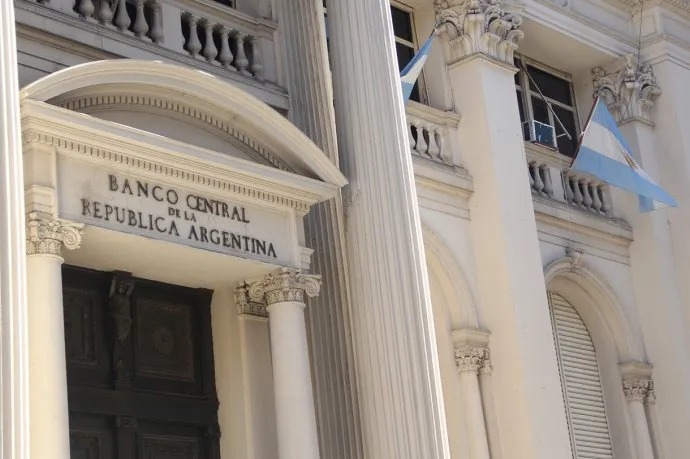
Argentina’s Central Bank struck a US$2 billion repo with seven international banks on Wednesday, using BOPREAL 1-D bonds as collateral. The monetary authority awarded the total tendered amount during the auction.
Repos, short for repurchase agreements, are a form of short-term borrowing mainly used by governments. They involve one market participant — in this case, the Argentine government — selling a security to another, then buying it back at a higher price at an agreed future date.
Last January, the Central Bank had already struck a US$1 billion repo with five international banks.
The Central Bank will pay an interest equivalent to the Secured Overnight Financing Rate — SOFR, the cost of borrowing US dollars overnight collateralized by US Treasury securities — plus a 4.5% margin. This represents an annual fixed rate of 8.25%, a 55 basis point reduction compared to the previous bid.
The final maturity of the operation will be in April 2027.
Last month, the monetary authority’s vice president, Vladimir Werning, announced that repos would be part of the strategy to accumulate international reserves without resorting to buying U.S. dollars while the exchange rate is above the currency band.
The currency band scheme, part of an agreement Argentina reached with the International Monetary Fund (IMF), implies allowing the dollar to float between AR$1,000 and AR$1,400. The Central Bank only buys or sells dollars to manage the exchange rate if it reaches these limits. The deal allows the monetary authority to buy dollars when the exchange rate is within the threshold, but the government decided not to.
