
 Solange Rial
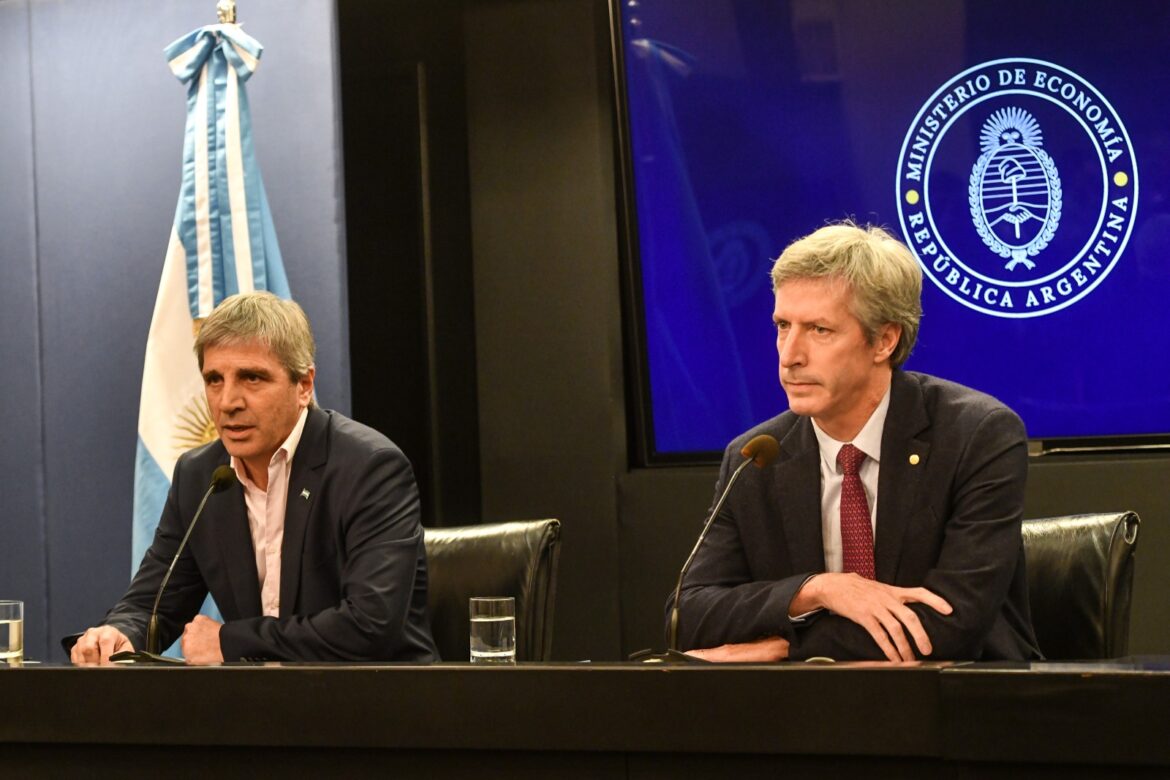
 Economy Minister Luis Caputo and Central Bank (BCRA) President Santiago Bausili’s economic announcements on Friday were not what the market expected.
Although they said the Treasury would absorb the Central Bank’s interest-bearing liabilities — in line with the idea of ending monetary emission — they did not offer a deadline for lifting currency controls known as the cepo. The market reacted poorly to this on Monday.
“Beyond the technical changes to be implemented, it seems clear that the end of the cepo is not close,” Outlier consulting firm said. “It might happen in the last quarter, something the market did not welcome, as it is clearly focused on this.”
Argentine dollar bonds and stocks traded on Wall Street plunged by up to 10% and country risk exceeded 1,500 points. Stock market dollars soared: the CCL dollar climbed 4.6% to AR$1,412 per dollar, while the MEP climbed 3.7% to AR$1,413. The gap between these rates and the official dollar rate is now 55%.
“With a market increasingly anxious to understand what exchange rate policy will look like (given the true exchange rate, the seasonality of foreign currency inflows in Argentina, the maturity profile of the debt in dollars, the recent performance of the Brazilian real and soybeans, among other things), Caputo repeated that everything will remain the same in the immediate future. That is to say, the crawling peg will remain at 2%, the 80-20 blend will remain unchanged, and there will be no devaluation,” consulting firm 1816 stated.
The “blend” dollar allows exporters to sell 80% of their dollars in the official market and 20% at the blue-chip swap rate.
Economist Gustavo Ber agreed with that analysis. “Investors’ first reaction was very cautious as they waited for additional details about the implementation of the new monetary scheme,” he said. “They also want to know what the additional fiscal [requirements] and reserve situation will be, since the main thrust of exchange rate policy will remain unchanged for the moment.”
Ber concluded that although the market recognized the importance of progress in cleaning up the BCRA’s balance sheet — and acknowledged that this would require greater fiscal effort — its expectations “were not confirmed.”
Pressure on Caputo and Bausili
The BCRA head confirmed that the Central Bank will lose about U$S3 billion in reserves during the winter. While seasonality comes into play, the loss in competitiveness and pressure due to the exchange rate are also contributing factors.
At the same time, foreign currency demand has been growing over the last few weeks due to energy imports. Other analysts argue that the drop in interest rates made loans cheaper and many agricultural producers, instead of selling their dollars, opted to take out loans.
This model is being questioned from abroad. Barclay’s investment bank said that Argentina is once again facing an “exchange rate trap,” with an appreciation of the peso above advisable levels, while Bank of America economists warned that the exchange rate is “under pressure.”
Mutual funds bought dollar-adjusted bonds for almost AR$100 billion last week to hedge against a possible devaluation, a sign that the market is losing faith in the administration’s words.
