
 Buenos Aires Herald
Martín Mórtola Oesterheld was only four in 1977 when he last saw his grandfather, The Eternaut author Héctor G. Oesterheld.
They were both in a dictatorship death camp.
Martín ended up at the El Vesubio clandestine center of detention after being abducted along with the family who was taking care of him. His parents, Estela Oesterheld and Raúl Mórtola, both Montoneros resistance militants, had already been killed by the military. His grandfather, one of the most renowned Argentine comic book writers, was being held at El Vesubio after being kidnapped in April 1977. Héctor asked the military to take the child to his wife and Martín’s grandmother, Elsa Sánchez, who would end up raising him.
This is just a fraction of the Oesterheld family tragedy, one of the most heartbreaking episodes of the murderous military dictatorship that ruled the country between 1976 and 1983 and caused more than 30,000 desaparecidos.
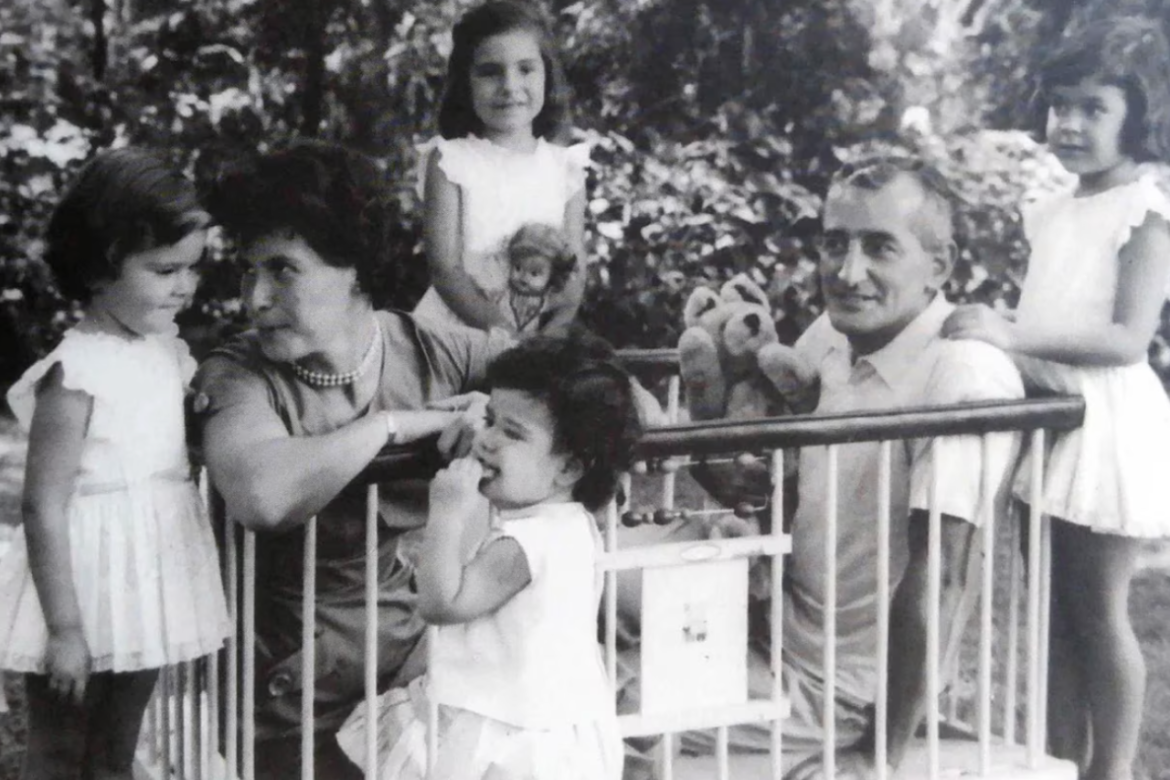
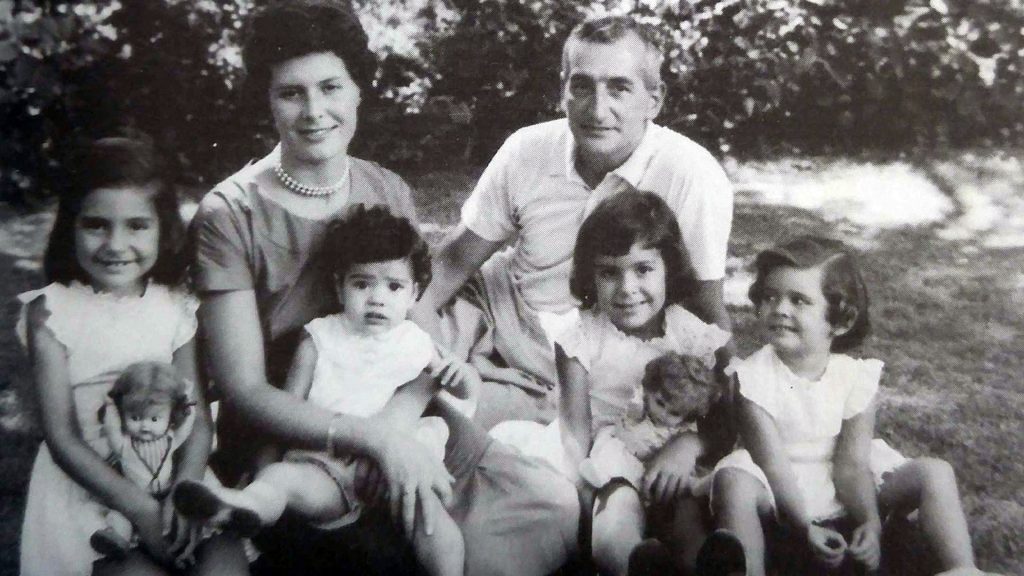
Martín, now a creative consultant with Netflix’s The Eternaut series, is one of only 3 family members out of 11 to survive the years of terror. Héctor, his four daughters, and two sons-in-law were either killed or disappeared. Two of Héctor’s daughters were pregnant when taken to death camps. It is believed they gave birth to children who the Grandmothers of Plaza de Mayo are still searching for to this day.
Joining the fight
Born in 1919, Héctor Germán Oesterheld wrote children’s science books for a living before becoming a well-established writer of comics and sci-fi short stories and novels. His work included Bull Rocket and Sargento Kirk, which was published in 1953 and illustrated by Corto Maltese creator Hugo Pratt, an Italian-born artist who was inducted into the Will Eisner Award Hall of Fame 2005.
His characters Ernie Pike and Sherlock Time from the mid-1950s first appeared in Hora Cero, a magazine he created and managed. The magazine would later publish the original The Eternaut, drawn by Francisco Solano López, between 1957 and 1959. The comic strip went on to become an Argentine culture landmark, and Hora Cero into an iconic publication. Its influence is so noteworthy that its launch date, September 4, has become the country’s official Comic Book Day.
Latin America was immersed in political turmoil in the 60s and early 70s. The Cuban revolution and US-backed military dictatorships in the region had a profound impact on Oesterheld, who wrote a comic-book biography of Ernesto ‘Che’ Guevara in the late 1960s. He would eventually join the Montoneros armed organization as a courier.
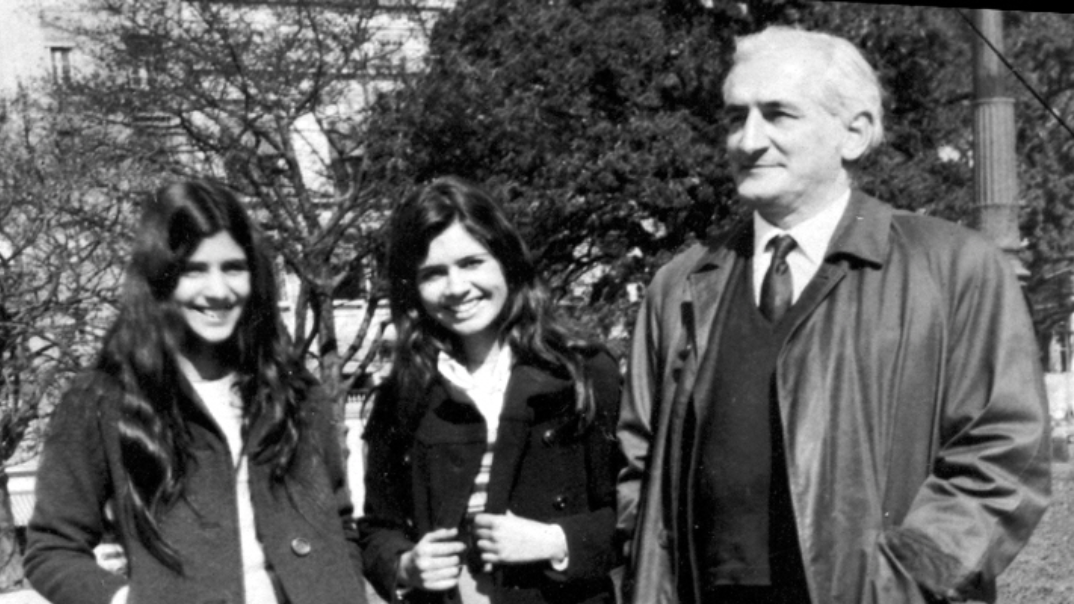
His daughters Beatriz, Diana, Estela, and Marina had been actively political since their teens and were already part of the same guerrilla organization. Elsa was worried and questioned Héctor for their dangerous activism, but to no avail.
“I cannot exclude myself from the fight in which all young people are involved, including my daughters, which is also for a cause I have always believed in: a better country,” he told her.

On June 19, 1976, shortly after the military coup, 19 year-old Beatriz was the first to be kidnapped by the military. She was tortured and murdered in a staged confrontation. Her body was found days later in an anonymous grave in the San Isidro cemetery.
Héctor was already in hiding at the time and writing a much more politized sequel to The Eternaut. He included a heroic main character named María, in honor of his daughter Beatriz’s nom de guerre.
Diana was 23 and six to seven months pregnant when she was kidnapped on August 7 in San Miguel de Tucumán. She reportedly gave birth while captive in Buenos Aires. Her partner Raúl Araldi was kidnapped in the same city one year later. His remains were identified in 2010 by the Argentine Forensic Anthropology Team at the Northern Cemetery of Tucumán. The couple already had a one year-old son, Fernando, who is still searching for his missing brother or sister.
Marina, who was 8 months pregnant at the time, is believed to have been kidnapped shortly after her partner Alberto Oscar Seindlis, sometime between late November and early December 1977 in Buenos Aires province. Her child is also believed to have been stolen and illegally appropriated.
Héctor was kidnapped by Army forces on April 27, 1977, allegedly in La Plata. Subsequent trials for crimes against humanity established that he was kept alive for months and spent time in several clandestine centers including El Campito, one of the several death camps that operated in Campo de Mayo Army Base. The 8.000 hectares (19.768 acres) site, one of Argentina’s largest military compounds, would later become a main location for The Eternaut series.
According to reports from survivors, Héctor suffered extreme hardship during his captivity. He was physically and mentally tortured, as the military used the fate of his family as a tool of psychological torment.
One witness said Héctor spent lots of time on his drawings, which he later gave as presents to other prisoners to lift their spirits. His disappearance was one of the cases included in the 1985 Trial of the Military Juntas that resulted in a life sentence for Army leader and Junta president Jorge Rafael Videla.
A hero against impossible odds
Elsa Sánchez de Oesterheld joined the Grandmothers of Plaza de Mayo organization in the early 1980s. She actively searched for her grandchildren until she passed away in 2015 at the age of 90.
Asked decades later how she managed to pull through the ordeal that decimated her family, she had no explanation. “I am a mystery to psychologists. I think Martín saved me; he was three years-old and I had to take care of him,” she replied.
Her heroic character was visible to all, something the Buenos Aires City branch of H.I.J.O.S — an organization of the children of disappeared parents — referenced when paying their respects to her after she passed away. .
“No one knows how that tiny woman was so great, despite everything the perpetrators did to her. Elsa survived it all, overcoming impossible odds, and always fighting for justice.”

Ten years after her death, the series based on her husband’s story may prove to be crucial to her lifelong search. A few days after The Eternaut premiered on Netflix, H.I.J.O.S launched a campaign on social media and the streets. “Are you watching The Eternaut? If you are, and you were born in November 1976, or between November 1977 and January 1978, and you have doubts about your identity or that of someone who was born on those dates, contact the Grandmothers,” they wrote on X. They also pasted pictures of the missing Oesterheld family members on street posters of the series across Buenos Aires.
“We are still looking for the grandchildren of Héctor Germán Oesterheld and Elsa Sánchez, and they may be watching this series,” they wrote.
The campaign is paying off. “The impact of the series has prompted more incoming inquiries in these past few days, and more will surely follow,” Grandmothers’ secretary and the 57th grandchild found Manuel Gonçalves Granada told news agency EFE, urging those with doubts regarding their origins to come forward.
“If you were born during the dictatorship in Argentina, you could be one of the two grandsons or granddaughters of the Oesterheld family, or any of the other 300 men and women from that group of stolen babies that we are still searching for today.”
If you were born between 1975 and 1983 in Argentina and have doubts about your identity, contact the Grandmothers of Plaza de Mayo.
