
 Buenos Aires Herald
It was December 25th, Christmas Day, 1980.
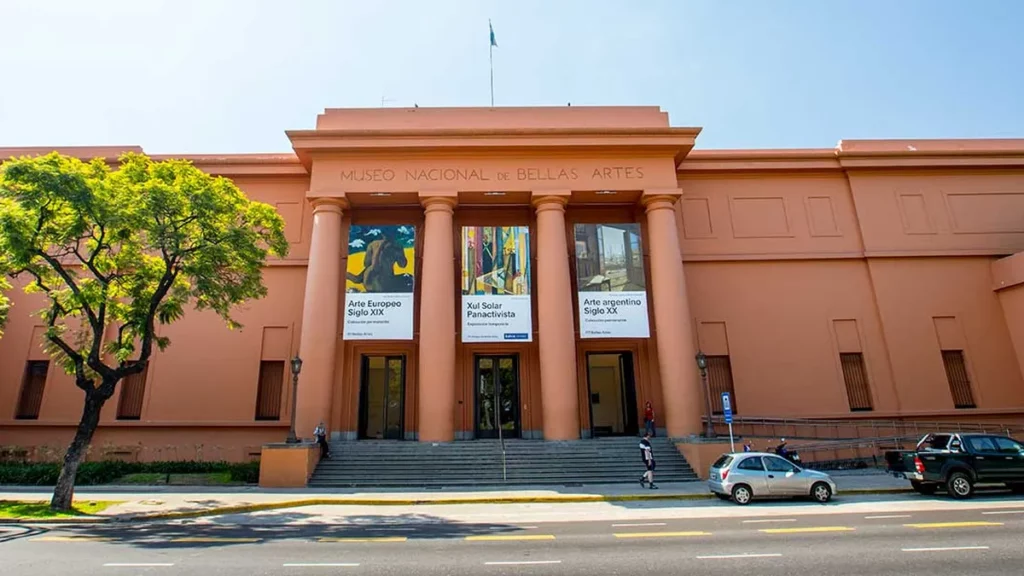
Argentina was still ruled by a genocidal military dictatorship, but everything was relatively quiet at the Buenos Aires Museum of Fine Arts. Eusebio Eguía, the night guard on shift, was having dinner with police firefighter Anselmo Ceballos, who was stationed there because the military had deemed the Museum as a “sensitive asset” of the state, a potential terrorist target. The men shared a bottle of wine over dinner. They did a final round to check the halls of the Museum before going to sleep. Everything seemed fine.
Around 4 a.m., Eguía woke up to a burning smell. The hall was surrounded by thick smoke. He woke Ceballos up and they followed the smoke down to the room of the Mercedes Santamarina Collection only to find that all the paintings were missing. Sixteen artworks from 19th-century French impressionists — Renoir, Degas, Gauguin, Cezanne — all worth several million dollars each. All gone. A handful of Chinese antiques had also vanished.
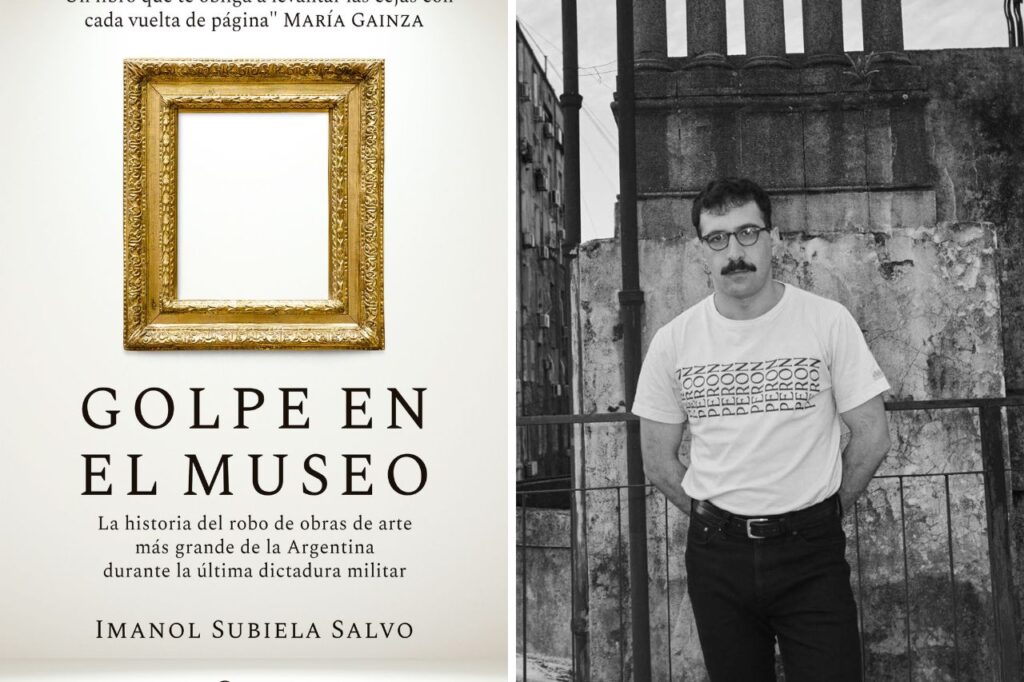
It was the biggest art robbery in the history of the country. The story behind it involved dictatorship gangs running shady businesses on the side, the kidnapping and torture of museum employees, a British detective, a Tawainese arms dealer, and Argentina’s most flamboyant federal judge. The events are thoroughly narrated — almost like a spy novel mixed with a horror film — in Imanol Subiela’s investigation Golpe en el Museo, published by Planeta earlier this year.
The torturers
The investigation was formally run by Judge Laura Damianovich de Cerredo, who was seen in clandestine centers of detention like Pozo de Banfield, demanding police to torture the people who were going to testify before her. In 1983 she had gone too far even for junta parameters. She was tried and banned from the judiciary for life.
Eguía and Ceballos were immediately arrested. The night guard was tortured so badly by police that he attempted suicide the next day. Museum employees were terrified: they were being randomly followed and brought to the police precinct for interrogation. Except for Eguía and Ceballos, most of them were never brought before the judge to provide legal testimony. Cerredo ordered Eguía and Ceballos’ release two weeks later. She had no clue what had happened.
Two months later, the night guard who was replacing Eguía, Jorge Celedonio García, was picked up by police and tortured so badly that he was hospitalized. Eguía visited García at the hospital. On his way back home, Eguía was kidnapped and tortured again. The 52-year-old man never talked about what happened and died in 2023 at the age of 97.
The tip
Three years later, in 1983, a well-known journalist with close ties to ultra-right Peronism named Guillermo Kelly received a tip about who had done it: a gang led by the infamous Aníbal Gordon. An experienced criminal and former convict, Gordon was recruited in the early 1970s by a government paramilitary organization, the Anticommunist Argentine Alliance (Triple A), to become an intelligence agent. After the 1976 coup, Gordon led dictatorship death squads and ran the clandestine center of detention and torture known as Automotores Orletti, which also operated as a local base of the Plan Cóndor.
Gordon was the ringleader of one of the most notorious gangs that operated on the side of state repression, kidnapping people for ransom and stealing property from desaparecidos. His partner Otto Paladino, head of the Secretary of State Intelligence (SIDE) during the height of the dictatorship, also ran a private security agency. Months before the heist, his company was hired to provide extra security in the Museum for an upcoming Colombian Gold exhibition, which gave them access to detailed information about the collections and the building.
In 1983, a similar heist occurred in an art museum in Rosario, where an armed gang stole 5 Spanish paintings worth 13 million dollars. Seven years later, two of the paintings were found on the trunk of a car belonging to Gordon’s former driver.
Kelly was prepared to write an article about his findings. But just when it was about to be published, he was kidnapped and tortured by Gordon’s gang. Before he was forced to release him by order of his superiors, Gordon admitted to Kelly that “most” of the information he had on him was true. In January 1984, a month after democracy was restored, Gordon was arrested for the kidnapping, and sentenced to 16 years in prison. He died of lung cancer in jail the following year.
The paintings
The paintings emerged, years later, in 2001, when an alleged German philanthropist from Texas walked into the London office of art dealing firm Sotheby’s. She needed an appraisal of a certain collection of 19th century French impressionist paintings she wished to buy. She had learned about it from a friend who worked at the DEA. It was now owned by a Taiwanese lumber executive named Arthur Lung, who had obtained it in Surinam and later moved it to Taiwan.
But the deal was botched when Sotheby’s confirmed that the lot was actually the stolen Santamarina collection. The source for their discovery was Art Loss Register, a company run by a former British colonel with ties to military intelligence, named Sir Julian Radcliffe. A sort of international art detective, Radcliffe chased down stolen artworks and returned them to their rightful owners for a considerable fee. This one could be a big paycheck, and Radcliffe was eager to represent Argentina and get the collection back to the Museum.
Turns out, it wasn’t the best year for Radcliffe to get either formal backing or resources from the Museum or the Argentine government. In 2001, Fernando de la Rúa’s government was facing a tectonic crisis that would end with his sudden resignation and country-wide protests with dozens of deadly victims by police repression. By the time Radcliffe came to the country — he managed to join prime minister Tony Blair’s delegation — the country was in a political and social meltdown.
The combination of Argentina’s urgent economic and social priorities, plus international bureaucracy, legal feuds, and some alleged secret negotiations between then-Museum director and Radcliffe, bogged down the recovery of the collection. Meanwhile, three of the paintings had suddenly appeared in a French gallery, through the alleged nephew of the Taiwanese businessman, who by then was suspected of arm trafficking.
The end
The last main character in this story was a very special figure from Argentina’s recent history: federal judge Norberto Oyarbide. A rather flamboyant 5 foot 2 inches tall man with a taste for the cameras, Oyarbide was a symbol of the late ‘90s dirty link between politics and the judiciary. In 1998, he had been at the center of an all-out scandal when a male prostitute accused him of asking for bribes, and leaked a video of him in his gay brothel. After being acquitted from that case, Oyarbide needed to be associated with good causes. He quickly ruled that junta leader Jorge Rafael Videla be sent back to prison from his home arrest. The Santamarina collection case would also help raise his profile.
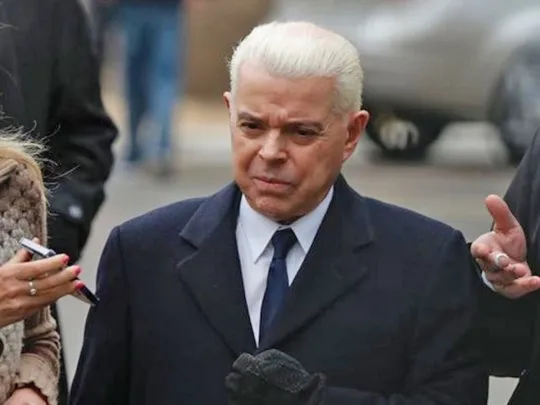
His theory was that Gordon’s gang had stolen the paintings and traded them to Lung in exchange for arms for the military junta. But the Taiwanese had disappeared after a mediation ordered by Interpol between their lawyer, Radcliffe, a French judge, and the Argentine state.
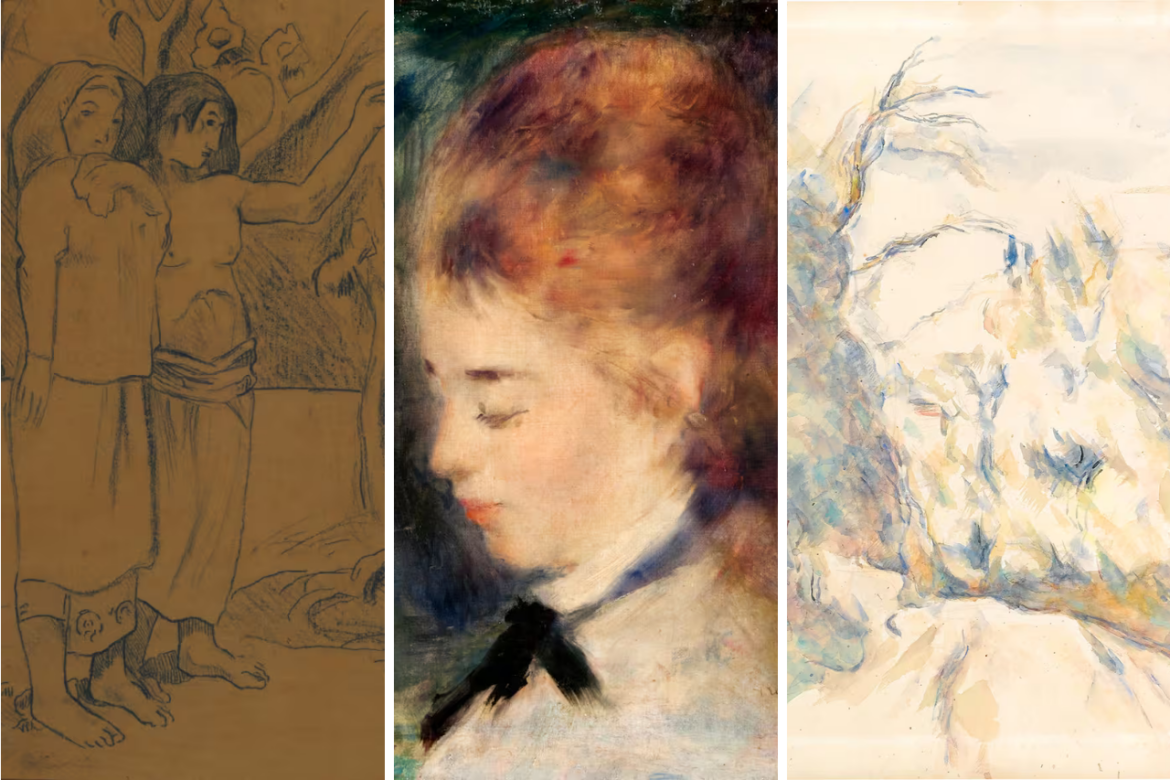
Oyarbide did manage to get his headlines: in 2005, a French court ruled that the three paintings found in France — works by Paul Cézanne, Auguste Renoir and Paul Gauguin — be returned to the Museum. With the Taiwanese gone, Oyarbide’s only chance was to file an international request to the Taiwanese courts to investigate their whereabouts. It was only four years later that he got their answer, disregarding his request. The reason was simple: Argentina didn’t recognize Taiwan as an independent nation from China. Oyarbide died of a Covid-related neumonia in 2021.
The three recovered paintings are currently back in the museum. The others, according to Subiela, are most likely lost forever, faded into a three-decade-long history of Argentine terror, politics, and ambition.
