
 Ivan Rojas Vega
 Paraguay has been known for many years solely as an agricultural country, with soybeans as its leading product, and, to a lesser extent, as a cattle-raising country with beef production. The country is currently positioning itself on the global animal-protein map with a different strategy: high-quality pork. This sector is in the midst of a full industrial process that is beginning to attract interest from the Asian market.
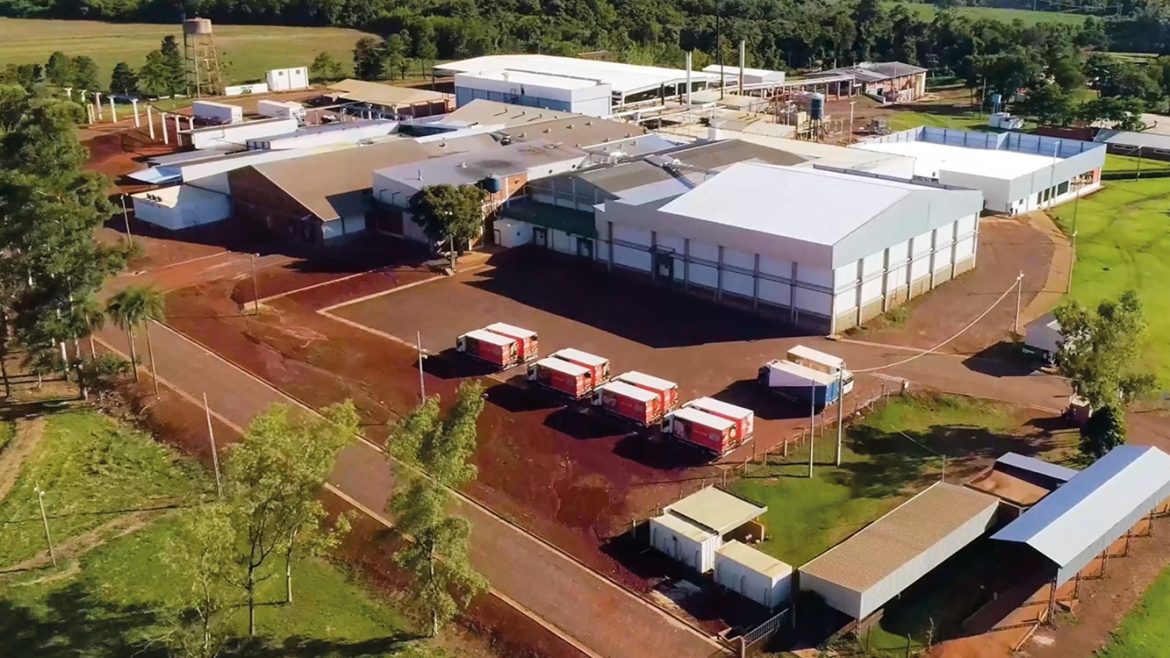
“We are in the right place: we have the land, the water, the grain, and the people,” said Marta Mareco, institutional relations representative of the UPISA meatpacking plant, a facility in the southern Department of Itapúa. Mareco explained how Paraguay, supported by an integrated production chain and investments in genetics, biosecurity, and industrialization, is making the leap from agricultural producer to exporter of this animal protein.
Asia on the horizon
Taiwan, an authorized market for this sector since 2022, currently accounts for more than three-quarters of pork exports. In 2024, it was exactly 77%. Central Bank of Paraguay (BCP, for its Spanish initials) data show that by the end of last year, the country exported pork there for a value of US$ 28.8 million, double that of 2023. Total commercialized volume amounted to 9,100 tonnes, almost a 90% year-on-year increase.
Taiwan recently announced the implementation of zero tariffs for Paraguayan pork, a decision that shows the promising future of this trade relationship, with Paraguay being one of only a few countries with diplomatic activity in Taipei.
In July, a Paraguayan business delegation will visit the region to open the way to new destinations. “First they will be in Taipei, then Singapore and the Philippines, which has already successfully passed the sanitary inspection,” said Mareco.
Singapore is gearing up to be a strategic partner. Beyond its domestic consumption, it operates as a logistic and commercial hub for Southeast Asia. “From there, we even re-export to Japan. It is a modern city-state, with a very favorable commercial openness and a US$90,000 per capita income,” Mareco explained.
Paraguay’s strategy contemplates not only exporting frozen cuts but also moving towards higher value-added products, such as canned and processed foods. “Singaporean businessmen are interested in investing directly in Paraguay. Investments do not stop,” Mareco added.
You might also be interested in: Incipient but promising: Paraguay industry is looking to go global
Integrated supply chains
Pigs are fed 80% corn and 20% soybeans and minerals, resulting in a meat these destination markets consider to be premium quality. The genetics, imported from Denmark and France, separates Paraguay from competitors like Brazil.
The transformation of this chain began in the late 1990s, when a Japanese-supported project identified Itapúa as a production center for animal feed. “We decided to transform vegetable protein into animal protein,” Mareco recalled. The effort has paid off: Paraguay now produces pork all year round, which has made it possible to overcome the seasonal nature that has historically limited its domestic consumption.
Pork has also gained ground in the domestic market. Traditionally eaten only during Easter and New Year’s holidays, consumption now sits at 13 kilos per capita per year, a figure Mareco said was unthinkable two decades ago. “It used to be a secondary product compared to beef. Thanks to quality and availability, pork now has a different image,” she added.
This change in perception also responds to industry growth. New cuts, machinery imported from Germany to meet market demands, and a union strategy that makes the sector’s achievements visible are also part of the process.
Although UPISA was the first meatpacking plant to open the international market for Paraguayan pork, the National Service of Animal Quality and Health (Senacsa in Spanish) announced that in 2024 Frigorífico Pirayú was also authorized to export to countries such as Georgia and Ivory Coast, as well as Brazil.
Senacsa noted that some 393,644 pigs were slaughtered for export in 2024. This is a 20% increase compared to the previous year. The industry is undergoing an expansion period, not only in volume but also in diversification. In addition to traditional sausages, there are now packaged products such as pork loin and matambres, thus expanding market variety.
There are quite a few industries that are generating added value domestically through pork, especially in the sausage category. One example is Embutidos Franz, which has been operating since 2010 and is currently able to produce around 600 tonnes per month, according to its website.
This scene has led to the creation of the Paraguayan Chamber of Pork and Derivatives Industries (CAPAIPOD in Spanish), made up of several of the country’s meatpacking plants that work with this protein. In addition to existing exporters UPISA and Pirayú, the organization includes companies currently focused on the local market, such as Agropecuaria Itabo (La Porckina), Mutti, Studenko, and the Chortitzer production cooperative, which also have the potential to eventually sell abroad.
This association of pork industry companies, as well as the progress made in product slaughtering and exports, is indicative of the current process the sector is undergoing and what its expectations are for the future. Mareco, who heads the association, said that their agenda includes working toward process formalization and cut-type standardization, among other issues.
Making a bet on regional development
According to Mareco, some 50,000 Paraguayan families currently depend on pork production. “This model transforms territories. It is a way out of poverty because it generates employment, added value, and leaves wealth in the country,” she stressed. Pig production is intensive, as cycles are short (around 110 days) but require significant investments in biosecurity and technology.
There is no shortage of challenges. Land registration, improving bureaucratic processes for exports, and the need for industries to adopt international standards such as ISO are on the agenda.
Paraguay is making steady progress, while Latin America as a whole is emerging as the new center of global pork production, as Colombia and Ecuador are also on the rise. With Taiwan as a consolidated market, Singapore as the next stop, and the Philippines on the horizon, Paraguayan pork is beginning to make a name for itself in Asian households.
Cover photo: UPISA meatpacking plant (courtesy of UPISA)
