
 Martina Jaureguy
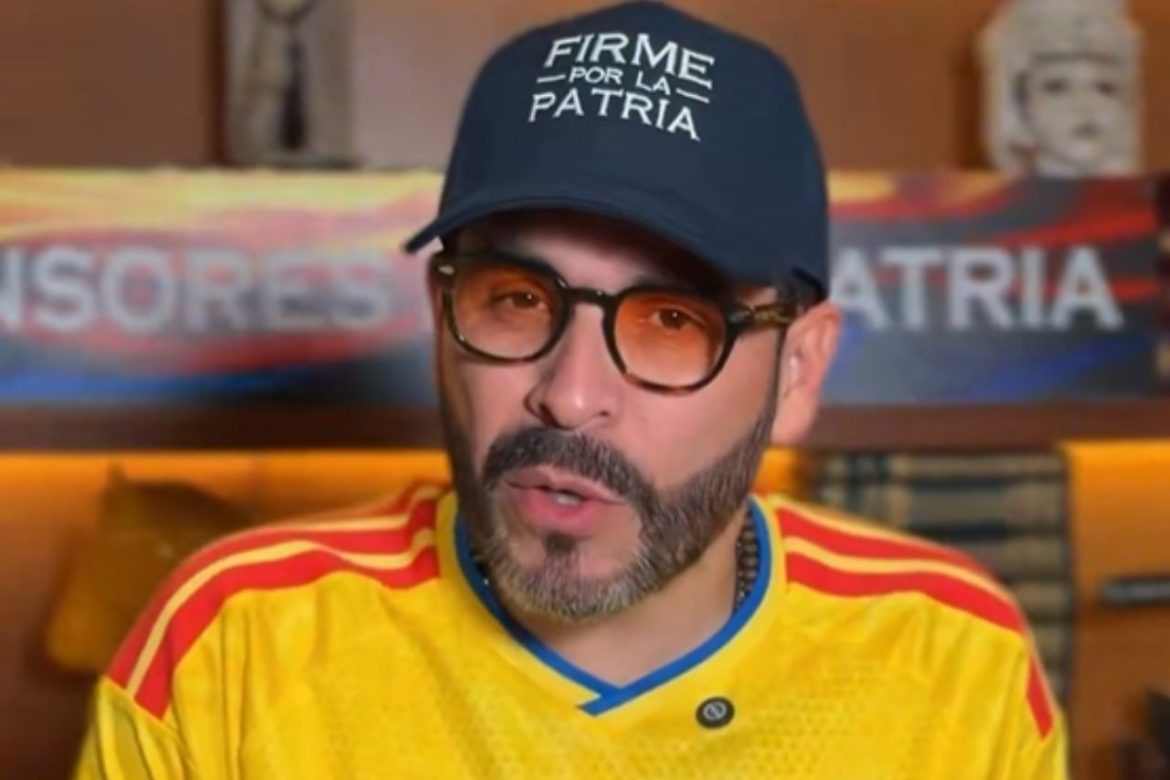
 Colombia’s electoral authorities on Wednesday formally declared Abelardo de la Espriella president-elect after completing the official vote count, confirming his narrow victory in Sunday’s runoff election.
He is due to take office on August 7.
Left-wing candidate Iván Cepeda, backed by outgoing President Gustavo Petro, acknowledged the far-right candidate’s victory hours before the official declaration, though he continued to question the integrity of the election.
The National Electoral Council certified De la Espriella as president and José Manuel Restrepo as vice president after tallying votes from all of Colombia’s departments and citizens living abroad. The pair will govern through 2030.
“The Colombian people have won. We defeated fear, threats and those who believed they could take away Colombia’s future,” De la Espriella wrote on X after the announcement.
The political newcomer also pledged to govern with “unity and commitment” in pursuit of what he called a “Miracle Homeland.”
The final count showed lawyer De la Espriella winning by just over 250,000 votes — less than one percentage point — underscoring the deep polarization that marked the campaign.
According to electoral authorities, the official count matched the preliminary tally by 99.997%, indicating virtually no discrepancy between the two results.
Cepeda alleges irregularities
In a statement on Wednesday morning, Cepeda said he accepted the outcome “as an act of democratic responsibility” and in order to contribute to “coexistence, dialogue and peace.”
At the same time, he argued that recognizing the result did not require him to “remain silent” about what his coalition considers serious irregularities.
“We denounce the open and undue foreign interference in Colombia’s internal affairs, particularly the interventions carried out by the U.S. government and, specifically, by President Donald Trump in favor of Abelardo de la Espriella’s candidacy,” Cepeda said.
He also alleged the use of “sophisticated manipulation strategies” involving artificial intelligence and claimed there had been a “massive vote-buying operation.”
While Cepeda’s coalition, Pacto Histórico, had filed requests for recount reviews over alleged irregularities, it withdrew those challenges after he publicly recognized De la Espriella’s victory.
The coalition said, however, that it would continue investigating what it described as “dirty media campaigns” and potential problems with the electoral software used during the vote.
Peru also steers to the right
Peru also appears to be nearing a decision on its next president. Although the official count has yet to be completed, right-wing candidate Keiko Fujimori has built a lead that local media consider insurmountable over left-wing rival Roberto Sánchez.
The two faced off in a June 7 runoff that has produced one of the closest elections in Peru’s recent history. The count has dragged on for nearly three weeks amid disputes over ballots and counting procedures.
With 99.8% of votes tallied, Fujimori leads Sánchez by roughly 44,000 votes — less than one percentage point. While a small number of ballots remain uncounted, Peruvian newspaper El Comercio reported that the margin is mathematically irreversible.
Sánchez has refused to concede defeat, accusing electoral authorities and the Foreign Ministry of modifying rules governing the counting of votes cast by Peruvians abroad in a move he claims favored Fujimori.
