
 Juan Marcos Pollio
 La Rioja Governor Ricardo Quintela announced that his administration will once again issue quasi-currency to fund upcoming wage increases. The news comes as the provincial economy remains in default with international markets and faces a squeeze in federal revenue transfers.
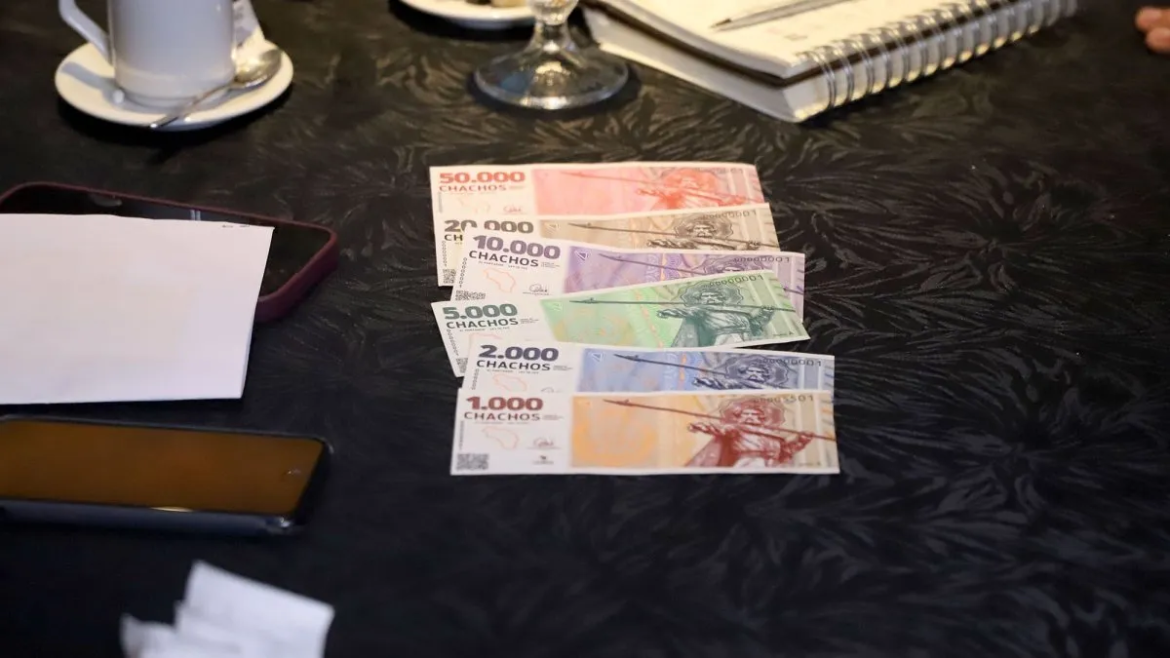
In 2024, La Rioja issued quasi-currency for the first time in more than 20 years. The bonds were officially called Debt Cancellation Bonds (in Spanish, BOCADE) but were quickly nicknamed Chachos, a reference to Ángel Vicente “Chacho” Peñaloza, the 19th-century Riojan leader whose image appears on the bill.
Quintela acknowledged on Wednesday that the province is having “difficulties” raising the funds to pay the year-end bonus but insisted that they would pay it. Asked by reporters, he confirmed that “the Chachos were back” and that they could be used starting in August to pay July salaries.
The govenor, however, clarified that the quasi-currency won’t be used to cover the year-end bonus. “Maybe they could be used for an increase,” he said.
Despite the stir caused at the time, the “Chachos” circulated for only six months — from mid-2024 to December of that year.
An economy under strain
Alejandro Pegoraro, an expert on provincial economies and director of the consultancy Politikón Chaco, told the Herald that La Rioja “is one of the three provinces most dependent on revenue-sharing transfers [from the federal government].”
According to data from the Argentine Institute of Fiscal Analysis (IARAF), revenue-sharing transfers to the provinces have fallen 2.4% so far this year.
“The drop is the same in relative terms for every province, but it hits La Rioja’s books much harder,” Pegoraro said.
In recent days, the La Rioja government had asked Javier Milei’s administration for AR$85 billion (approximately US$58 million at the official exchange rate) as an advance on revenue-sharing transfers. The federal government has yet to respond.
The only province in default
Pegoraro stressed that the core problem is that La Rioja has been locked out of the international debt market for two years, since it is the country’s only province in default.
“If it wanted to tap the local market, it would face a rate that would kill them.”
He added that the move comes as the La Rioja government sees that revenue will not have a significant recovery in the coming months.
“[They] need a financing channel to keep the payment chain going and cover its operating costs.”
Quintela’s administration was already forced to cut spending by 13.6% in the first quarter of 2026 to offset an 8.3% revenue drop over the same period — a move that allowed the province to register a fiscal surplus, according to Politikón data.
“Instead of borrowing on the capital markets, like the rest of the provinces are doing, La Rioja took on domestic debt by issuing quasi-currency, with the financing cost under its own control,” he added.
In February 2024, La Rioja missed a US$16 million principal payment on a US$300 million foreign-currency bond it had issued in 2017 to finance a wind farm, which it later sold. It later stopped paying interest on the bond as well.
Since then, La Rioja has also been ignoring rulings from a New York court, which ordered Quintela’s administration to pay US$39.9 million after a group of creditors filed a motion for summary judgment.
