
 Buenos Aires Herald
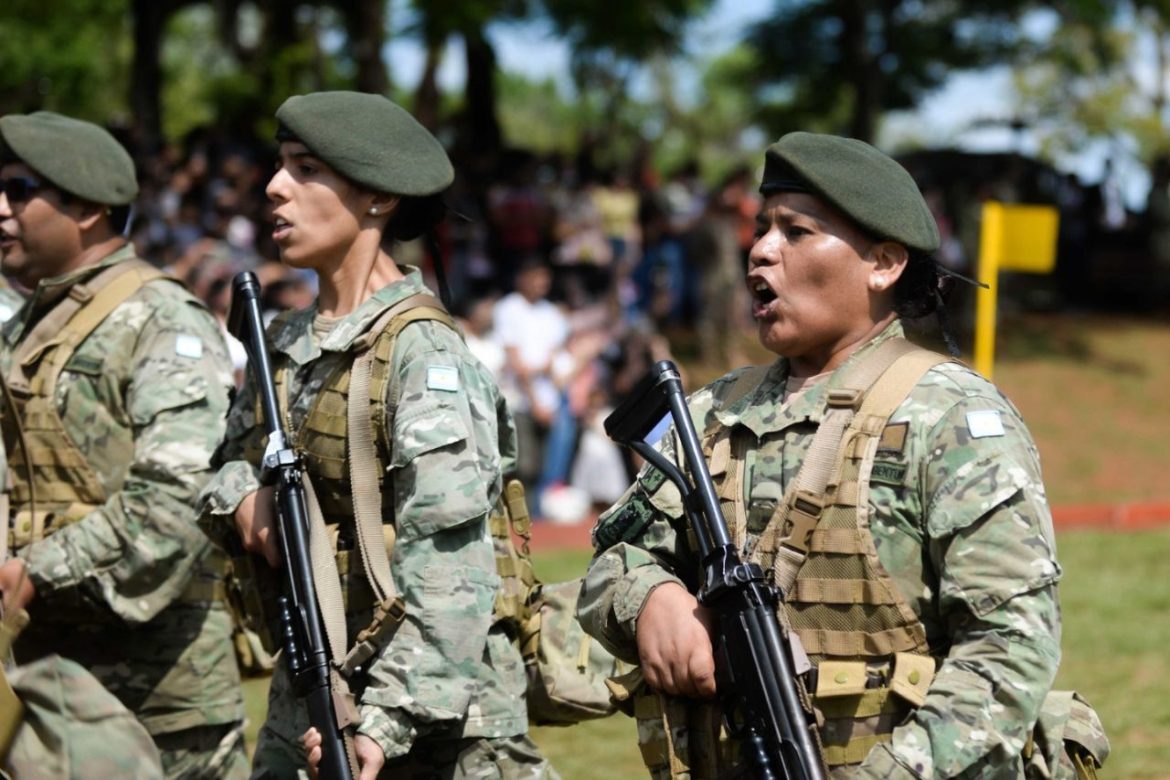
The Argentine defense ministry has deployed the armed forces in Salta province to control border crossings between Argentina and Bolivia.
According to the official resolution published Thursday in the Official Gazette, troops in the area will be tasked with improving security until December 15. The operation will also “contribute to the task of marking the country’s international limits.”
The resolution went on to say that the exact areas will be determined by the defense and security ministries, working jointly with local police and federal forces. As part of the operation, they will also register data, statistics, and other information.
The move is part of a broader initiative known as Operation President Julio Argentino Roca that allowed the armed forced to operate in the area, something that was not formally allowed. Prior to the operation’s launch last April, only military police — which are not part of the armed forces — were allowed to carry out control tasks at border crossings.
The military and domestic security
The military had been banned from taking part in domestic security operations since the end of the last military dictatorship in 1983. When the operation was approved earlier this year, critics argued that the new norm was illegal and went against laws regulating defense and domestic security.
Defense Minister Luis Petri vouched for the decision at the time, saying that only those who “defend drug traffickers, terrorists, and violent criminals” would find the measure controversial.
President Javier Milei’s government has taken several measures to more intensely control borders, at times seemingly replicating aspects of U.S. President Donald Trump’s anti-immigration policy.
In May, the Milei administration tightened migration legislation via a decree that human rights organizations said stripped foreigners’ rights in Argentina. The norm made deportations easier, restricted migrants’ access to health and education, and added more requirements for those who wanted to obtain Argentine citizenship or permanent residency.
To justify the norm, the government claimed that mass deportations set by President Trump posed a “new risk” for Argentina. The Milei administration expelled its first immigrant under this system in July. Juan Pedro Martinez Piedraita, a 60-year-old Afro-Uruguayan and father of two, who had been living in the country for 19 years.
In December, Security Minister Patricia Bullrich launched the “Güemes Plan” alongside Salta province authorities to strengthen border controls using federal military forces. In May, the Argentine town of Aguas Blancas, located on the Bolivian border, installed a 200-meter fence to strengthen immigration controls. Bolivia warned that this “unilateral measure” could affect the “peaceful coexistence” between the two countries.
