

 Buenos Aires Herald
Updated February 10, 3:20 p.m.
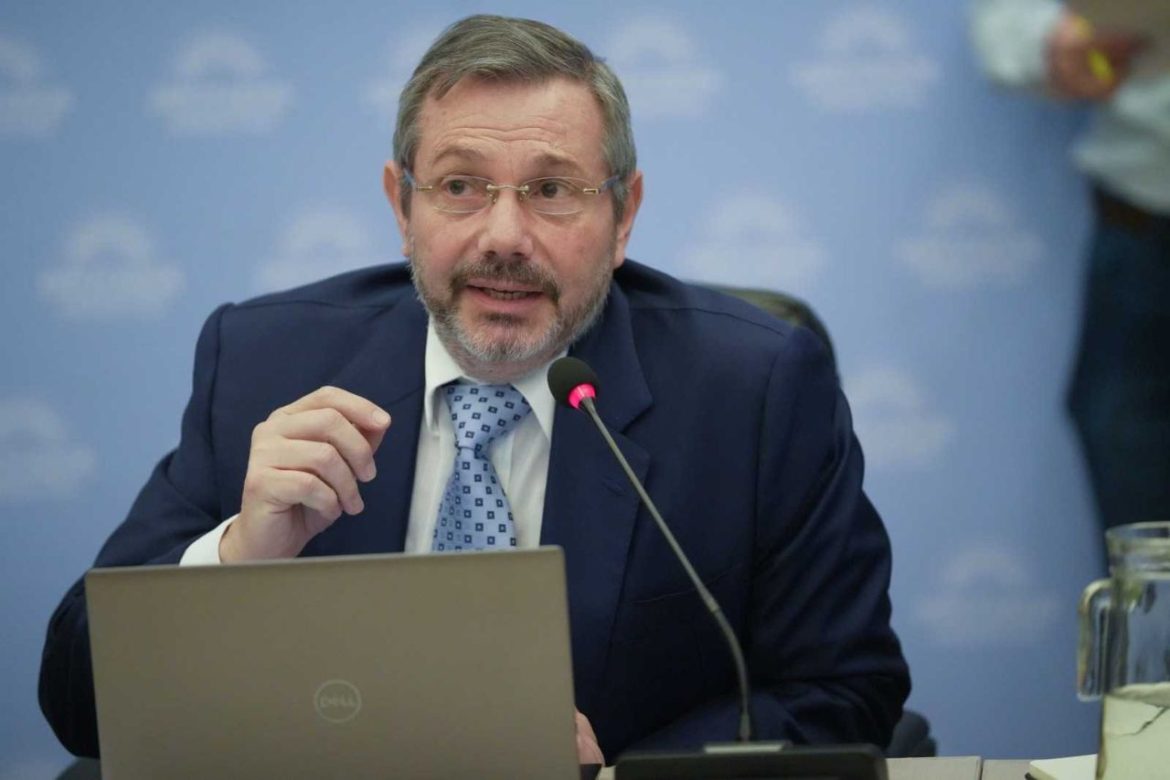
President Javier Milei asked ANSES social security bureau head Mariano de los Heros to resign on Monday after he claimed during an interview the previous day that the government wants to carry out a pension reform in 2025. Milei later said pension reform “is not on the agenda.”
Presidential spokesman Manuel Adorni said in an X post that de los Heros will be replaced by Fernando Bearzi, who until now worked as undersecretary of an ANSES fund.
On Sunday, de los Heros said in an interview with news channel TN that the government wants to raise Argentina’s retirement age and restrict the kinds of pension available to older adults who do not have the required 30 years of social security payments.
However, on Monday morning, Milei dismissed his comments. “He is saying that of his own accord,” he told news channel A24. “That is not what is on the agenda. Until you fix the labor issues, you can’t move forward with pensions.”
De los Heros is just one in a long list of public officials Milei has fired for comments or actions that don’t align with his ideas. On Monday he also removed Sonia Cavallo from her role as Argentine Ambassador to the Organization of American States days after her father Domingo Cavallo, a former economy minister, criticized the government’s economic program.
The previous ANSES head, Osvaldo Giordano, was also removed from the role after his wife, deputy Alejandra Torres, did not back Milei’s flagship Ley Bases.
Pension reform
“We have to discuss the pensions system before the end of this year,” de los Heros said on Sunday. “I believe Argentina deserves pension reform because the system as it is is broken.”
Argentine women can currently retire at 60, while men can retire at 65.
Workers currently have to make at least 30 years of social security contributions to retire. Those with fewer years of contributions can pay for the missing years under a system known as the pension moratorium. However, that scheme, which has been in place for two years, is set to end on March 23. The government does not plan to renew it.
“Today, there are people who don’t reach 30 years of contributions because the work world has changed. Those who don’t have 30 years of contributions don’t have the right to retire,” de los Heros said.
People who are 65 or older and don’t meet the requirements to receive a state pension can access a payment known as the PUAM, which is equivalent to 80% of the minimum pension. The minimum pension sits at AR$343,086 in February (US$319 at the official rate, US$287 at the MEP rate), after accounting for an additional AR$70,000 sum that is included in the payment.
Although de los Heros didn’t say what the new retirement age would be, de los Heros said that “raising the retirement age alone is not a solution.” The government could create a pension scheme in which people earn a sum that is “proportional to their contributions,” he said. Milei confirmed this idea during his Monday interview.
A “Proportional Retirement Payment” was proposed in the first version of Milei’s Ley Bases, but it was later removed because it lacked political support. Pension reform was also included in Milei’s May Pact signed last year, a 10-point list of broad political goals he agreed with many of Argentina’s governors.
In an interview with Forbes in December, Milei said that his planned labor reforms would bring more people into the formal workforce, laying the groundwork for a stronger pensions system.