
 Amy Booth
 By Amy Booth and Estefania Pozzo
President Javier Milei has passed a decree banning gender-affirming surgery and hormone therapy for trans people under the age of 18.
The decree, published in Thursday’s Official Gazette, says that existing provisions in Argentina’s Gender Identity Law go against children’s rights. However, trans healthcare and parenting advocates point out that in practice, irreversible treatments such as surgery and hormone therapy are very rarely administered to minors. The change, they say, is an attack on trans children.
Gabriela Mansilla, president of trans youth support association Infancias Libres, described the decree and the government discourse around it as “an attempt to sow disinformation and fear throughout society.”
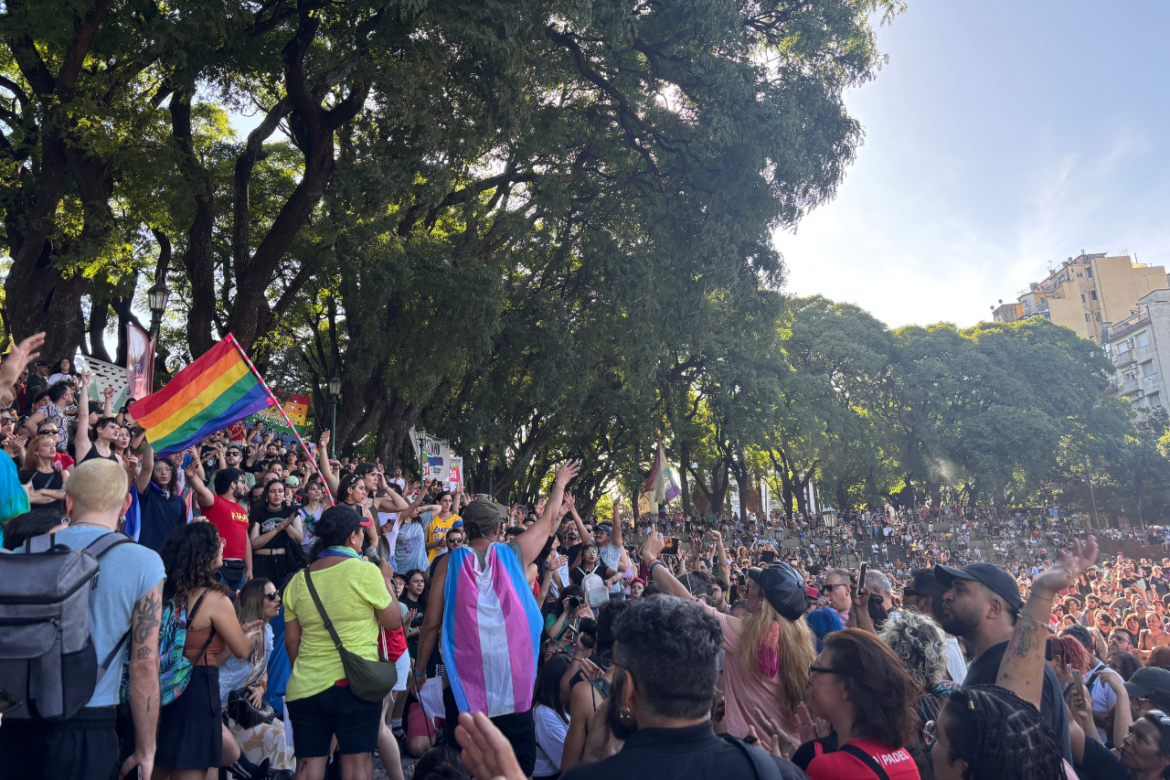
The decree was passed two weeks after Milei’s transphobic and homophobic remarks at the World Economic Forum in Davos sparked outrage among Argentina’s queer community, leading to massive nationwide marches on Saturday. Many queer rights activists have observed that Milei’s anti-trans agenda appears to mirror that of United States President Donald Trump.
Presidential spokesman Manuel Adorni announced the change on Wednesday, the day Trump signed an executive order to ban transgender athletes from girls’ and women’s sports.
The presidential communications team described the change, and a restriction on transfers of trans prison inmates that was also decreed on Thursday, as “frontal combat against gender extremism.”
Under Argentina’s Gender Identity Law, adults can receive surgery and hormones to adapt their bodies to the gender they identify with. They do not need judicial or administrative authorization.
Prior to the decree, the law stated that minors must give informed consent for such procedures, bearing in mind their age and how this affects their capacity to understand what the treatments involve. If the minor’s legal guardians refused to consent or cannot be obtained, a judge could give authorization. Judicial authorization was required in the case of surgery.
Thursday’s decree establishes that nobody below the age of 18 can access gender-affirming surgical procedures or comprehensive hormone therapy.
The presidential team’s statement said that children “do not have the cognitive maturity necessary to make decisions about irreversible processes that in many cases imply the mutilation of healthy organs.”
Vanishingly rare
Argentina does not collect statistics on treatment of trans minors in the healthcare system. However, specialists say it is vanishingly rare for irreversible surgical procedures to be performed on them. Therapy often starts with hormone blockers, which delay the effects of puberty until the individual has decided whether they would like to receive permanent hormone therapy.
“Then, with progressive autonomy depending on the age and maturity of the teenager, they can access hormone therapies with estrogen or testosterone,” explained Juana Molinari, co-founder of trans youth support organization El Teje. “The process is carried out with the support of healthcare professionals, including endocrinologists, general practitioners, and specialists in comprehensive trans health.”
By law, these treatments should be available in public and private healthcare systems alike. Psychiatric evaluations and court orders are not required. However, young trans people and their families often turn to the authorities because many medical professionals who do not fully understand the legislation create obstacles to treatment.
“In Argentina, it is not common for trans teenagers to access surgical interventions before they turn 18,” Molinari said. “The Gender Identity Law allows access to gender-affirming treatments, but in practice, surgery is typically carried out in adulthood, since health teams typically require that [the patient be] of legal age.”
“The real discussion should be about the right to decide over one’s own body, instead of imposing restrictions on trans people while allowing forced intervention of intersex people.”
Mansilla, whose daughter is trans, said that the president’s discourse puts her daughter at risk. “I just want my daughter to have the right to exist,” she said. “What can I say to her?”
