
 Andrés Lerner
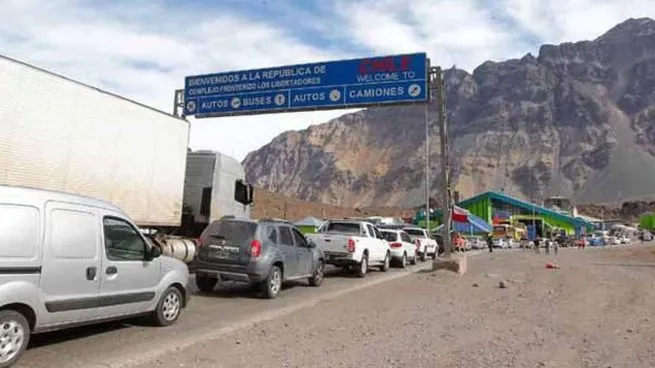
Shopping tours to Chile have doubled due to the appreciation of the U.S. dollar exchange rate with the Argentine peso. Close to 55 buses are crossing the Cristo Redentor border checkpoint in Mendoza every day, customs personnel told Herald sister publication Ámbito. Compared to Argentina, prices are 30% to 70% lower, and buses from Córdoba, San Juan, and Buenos Aires are already making their way there. Delays in crossing the border, however, may exceed ten hours.
The phenomenon is beginning to cause problems in Mendoza stores. Owners are asking for customs controls to be intensified. There is also concern about the role of informal couriers (known as “bagayeros”) and markets (known as “Persian markets”) amid a flooding of counterfeit merchandise.
Donald Trump’s victory in the U.S. elections means that a stronger dollar was expected. The Republican’s win is the reason currencies of emerging countries are falling. On Monday, the Mexican peso fell 1.7% and the Brazilian real dropped 1.3%. Argentina, on the other hand, is going against the grain and keeping its policy to appreciate currency in place.
The sector most affected by this phenomenon is the service economy. According to the Central Bank, this sector went from having a US$84 million surplus in January to a US$650 million deficit in September.
Long lines at the Cristo Redentor checkpoint have become commonplace. “Shopping tours more than doubled compared to last year; we have about 55 buses per day crossing the border to buy everything,” customs personnel told Ámbito.
Products of all types are entering the country, from small household appliances to cell phones. The main item, however, is clothing with counterfeit brands. Most of the articles brought from Chile end up in the informal markets in Mendoza, similar to the massive “La Salada” clothing fair in Buenos Aires province.
Changes in customs’ protocols
The accelerated growth of this phenomenon is creating logistical problems and customs agents are finding it hard to keep up. Controls are difficult and they usually end up in negotiations to establish some sort of “symbolic” fine for shoppers. Crossing with merchandise for commercial purposes is not allowed. At the same time, putting an end to the situation in the current conditions seems impossible.
Crossing the border can take up to ten hours. Customs decided to implement changes in protocol after the situation got out of hand in the last weeks. There were even incidents with personnel in charge of controls. From now on, one bus at a time will be allowed in the customs building. The rest will have to queue and wait three kilometers away.
Sources contacted by Ámbito, however, said that, far from speeding up the process, this proposed solution will slow it down even more. Moreover, there are estimates that customs personnel have a shortage of between 20 and 30 employees.
Mendoza businesspeople have complaints
In addition to the impact this will have on country’s balance sheet, the situation is affecting Mendoza retailers. The province’s economic federation recently issued a statement expressing its “deep concern over the persistent drop in sales in several economic sectors such as shoe stores, clothing, technology, and small household appliances, among others.”
That is why they requested that the provincial and national authorities “urgently” implement stricter measures for customs control in order to prevent smuggling and “guarantee a market of fair competition.”
They added that “the proximity with Chile generated a particularly harmful situation for Mendoza businesses due to the increase of consumers who travel to buy to the neighboring country, taking advantage of a difference in exchange rate and a more favorable tax structure for the supply of products at more competitive prices.”
On this point, they argued that “the phenomenon goes beyond what could be considered a simple cross-border competition.” In the statement, they said that they were “especially concerned with the shopping tour modality, which gives rise to an illegal practice of small-scale smuggling, where products purchased in Chile are brought into the country irregularly and then sold at fairs and through social networks.”
This situation puts the sustainability of local small and medium business owners at risk. “The apparel sector is particularly affected by trademark law violations, which seriously affect both intellectual property rights and the competitiveness of businesses that comply with national regulations,” the statement reads.
