
 Buenos Aires Herald
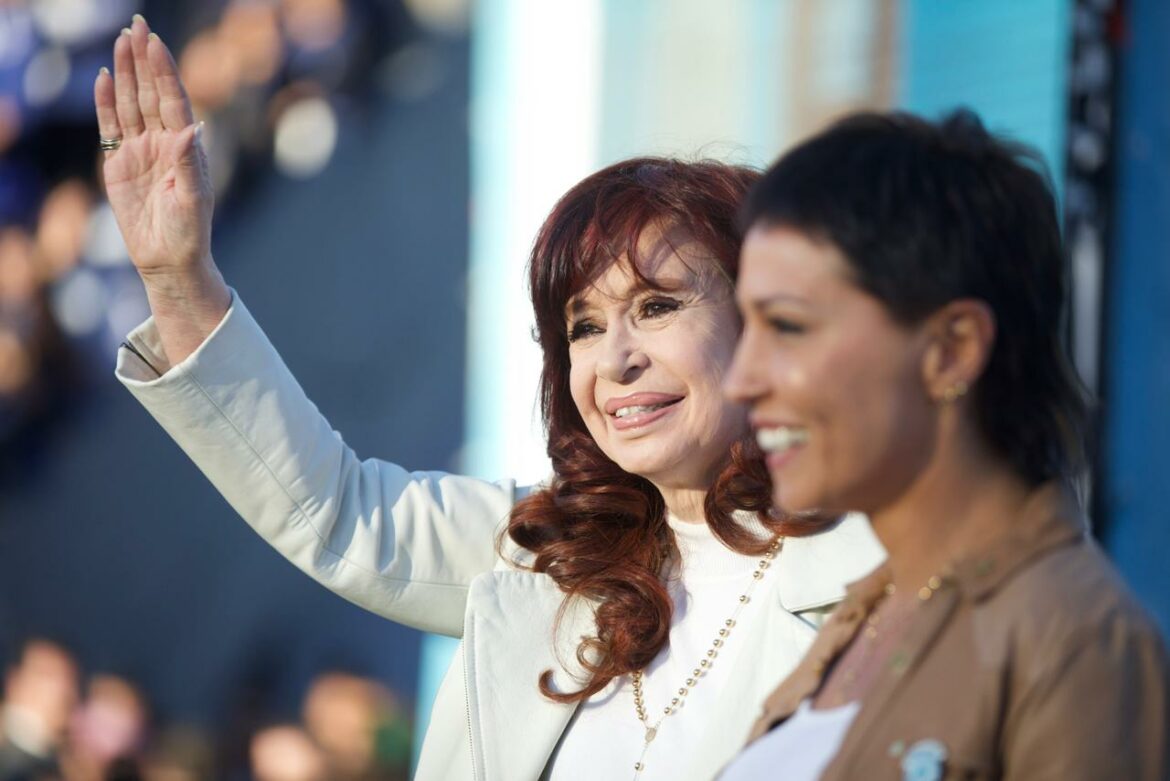
Former President Cristina Kirchner was declared the new head of the Partido Justicialista (PJ), the largest Peronist party in Argentina, by its electoral board on Tuesday evening. The former president and vice president was the sole candidate after a ruling stopped her rival, La Rioja Governor Ricardo Quintela, from competing.
According to a communiqué published by the party’s national legal representative, Juan Manuel Olmos, the motion was approved 13 votes to one.
Kirchner and Quintela were the two prospective candidates for party elections scheduled for November 17. However, the electoral board declared that Quintela had failed to gather signatures from the 2% of party members needed to back his candidacy. They gave him 24 hours to present the remaining signatures, contending that some were missing and others were not filed correctly. When the La Rioja governor didn’t comply, his candidacy was rejected.
Quintela took the matter to court, but last Friday, Federal Judge María Servini turned down his request that the PJ party elections be suspended to give him time to gather the necessary signatures. After Servini’s ruling, it wasn’t clear whether the elections would be carried out with Kirchner as the sole candidate, but the board ultimately decided to declare her the new president in Tuesday’s meeting.
Kirchner will likely assume the party presidency in March, with the crucial role of organizing candidates for the 2025 legislative elections. However, it’s likely that she will hold a public event on November 17 to take the reins of the party symbolically.
Weeks ago, it seemed like Quintela would be the only one running for the PJ elections after spending months touring Argentina to gather support. However, Kirchner announced her candidacy on October 7 after what is known in Argentina as a “clamor operation” to make Cristina the new party president, with Peronist politicians calling for her leadership on social media.
Despite rumors of a potential unity ticket with Kirchner as president and Quintela as VP candidate, Quintela decided to compete on his own. “You won’t be able to seize Peronism,” he had said in a communiqué after the accusations of irregular and missing signatures surfaced.
Former Argentine President Alberto Fernández was head of the PJ until August, when he resigned amid accusations of gender-based violence against his ex-partner Fabiola Yañez. Five PJ vice presidents were appointed to take his place temporarily at the helm of the party in March when he asked for a leave of absence.
Peronism has been struggling to find new leaders at least since 2021 when it lost the legislative elections, and Fernández was in the middle of a scandal due to pictures that showed he had hosted a party at the presidential residence in 2020 during Argentina’s COVID-19 lockdown.
According to political analyst Lara Goyburu, the crux of party disputes resides in tensions between “a more metropolitan Peronism associated with the progressive left and La Cámpora,” a Kirchnerist youth group led by Cristina’s son, Máximo Kirchner, and “a more traditional, provincial Peronism of certain governors who feel that the progressive agenda has diminished their social bases.”
In recent weeks, La Cámpora went all out not only against Quintela but also against Buenos Aires Province Governor and Kirchner’s protegee, Axel Kicillof, for not explicitly backing her candidacy.
