
 Buenos Aires Herald
Monthly inflation in Argentina ticked down by 0.7 points to 3.5%, the lowest month-to-month price increase since November 2021. Yearly inflation reached 209%, a report published on Thursday by the INDEC statistics bureau showed.
Prices have risen 101.6% in the first nine months of the year.
September’s monthly figure was the lowest in Javier Milei’s administration and the first time it pierced the 4-point threshold in four months. Inflation had been 4% or more a month since May.
The sector with the highest monthly was housing (7.3%) due to increases in rents and related expenses, such as electricity, gas and other fuels, as well as water supply. It was followed by clothing and footwear (6%), due to seasonal changes.
Economy Minister Luis Caputo celebrated the news shortly after it was announced. “The disinflation process continues and the course of fiscal and monetary orthodoxy will not change,” he posted on X.
President Javier Milei also celebrated the figure. He wrote “inflation is going down” in all caps in a post on X. He added that his government is fighting inflation without pegging the exchange rate or controlling prices.
“It takes a little longer, but it is genuine,” he said.
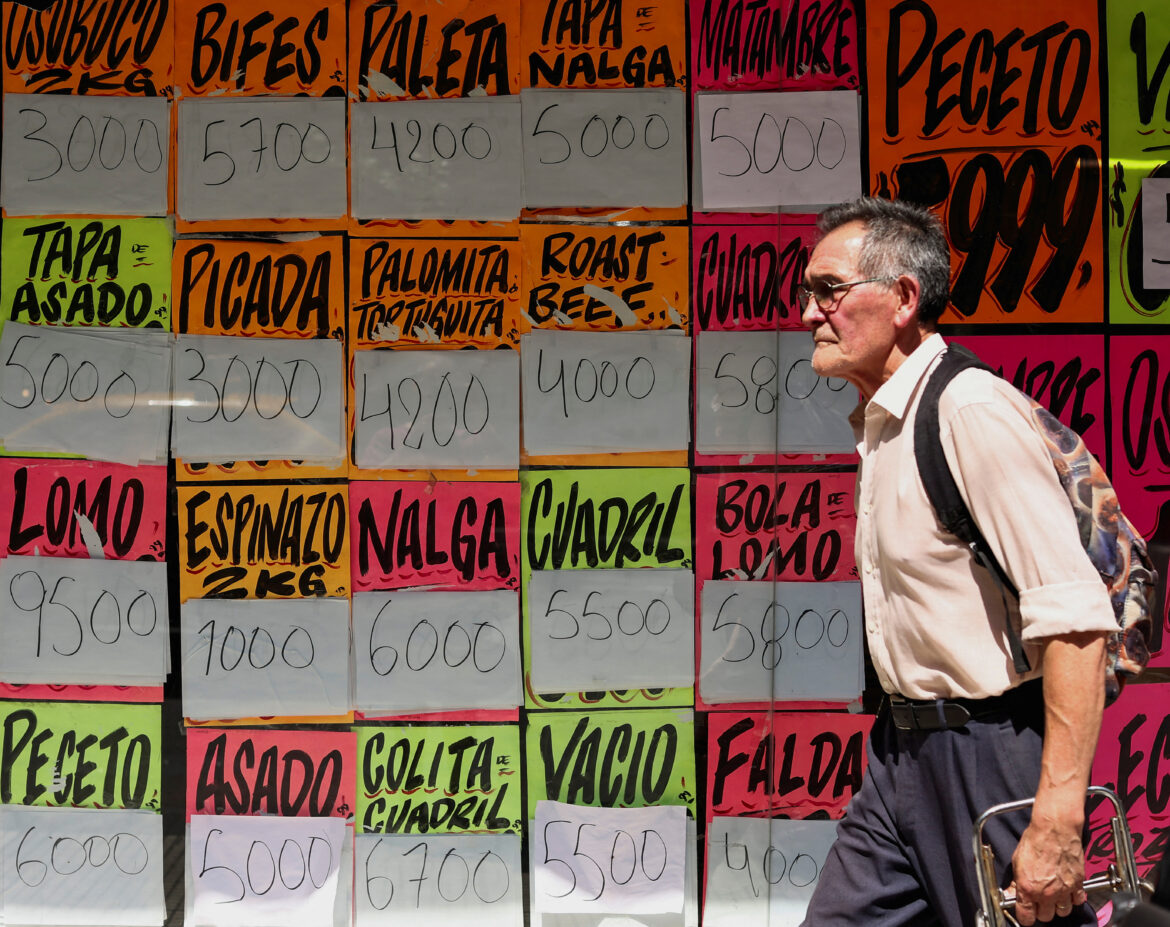
A report by the Centre of Argentine Political Economy (CEPA, for its Spanish initials) released after the government published the numbers said that the main reason for the moderation in food prices — which increased by 2.3% — was the drop in consumption.
The report added that, while the government was betting on a sharp drop in inflation in September due to the partial reduction of the PAIS Tax, the result was not as low as the administration hoped for. “Although a reduction in food and beverages is perceived, the magnitude does not meet the target, as the [government’s 2025] budget foresaw a price increase of 1.2% per month until the end of the year.”
After devaluing the peso by a record 54% in December, the government adopted a crawling peg scheme through which it devalues the national currency by 2% every month. The CEPA brief added that the blue-chip swap rate decreased by 4% in October, which could be another factor that helped contain price increases.
