

 Buenos Aires Herald
Waterborne diseases are now a risk in Brazil’s southernmost state, authorities say, as residents begin to return to flooded homes and clean up after catastrophic floods that killed at least 169 people.
Rains that started in late April swelled several rivers and lakes in Rio Grande do Sul state to record highs and more than 580,000 people were driven from their homes by the flooding, according to state officials.
Leptospirosis — a disease largely caused by the urine of infected rats in standing water — is currently health officials’ biggest concern, said the head of the state’s health surveillance center, Roberta Vanacor. He added that there had been a rise in cases in recent weeks.
Since the rains began, seven people have died from the disease. Another 10 deaths are under investigation as possibly caused by the disease. There have been early 2,300 potential cases reported, of which 141 were confirmed, according to the state’s health authorities.
To cope with the high demand for medical care, four field hospitals have been set up in the state, as well as mobile teams, which have already assisted thousands of people.
According to the health ministry, the floods have allowed the leptospirosis bacteria to flourish, facilitating illness outbreaks.
You may also be interested in: Uprooted by Brazil floods, foreign refugees ‘start all over again’
And as residents return to their homes, they may find an additional danger. “Snakes, scorpions, and spiders, these venomous animals will also seek shelter from rainwater in drier places,” said Vanacor.
Officials are also warning of the mental toll the destruction has caused.
“There’s a certain fragility to this moment for the population,” said Lieutenant Colonel Mauricio Specterow, who heads a field hospital in the state capital of Porto Alegre.
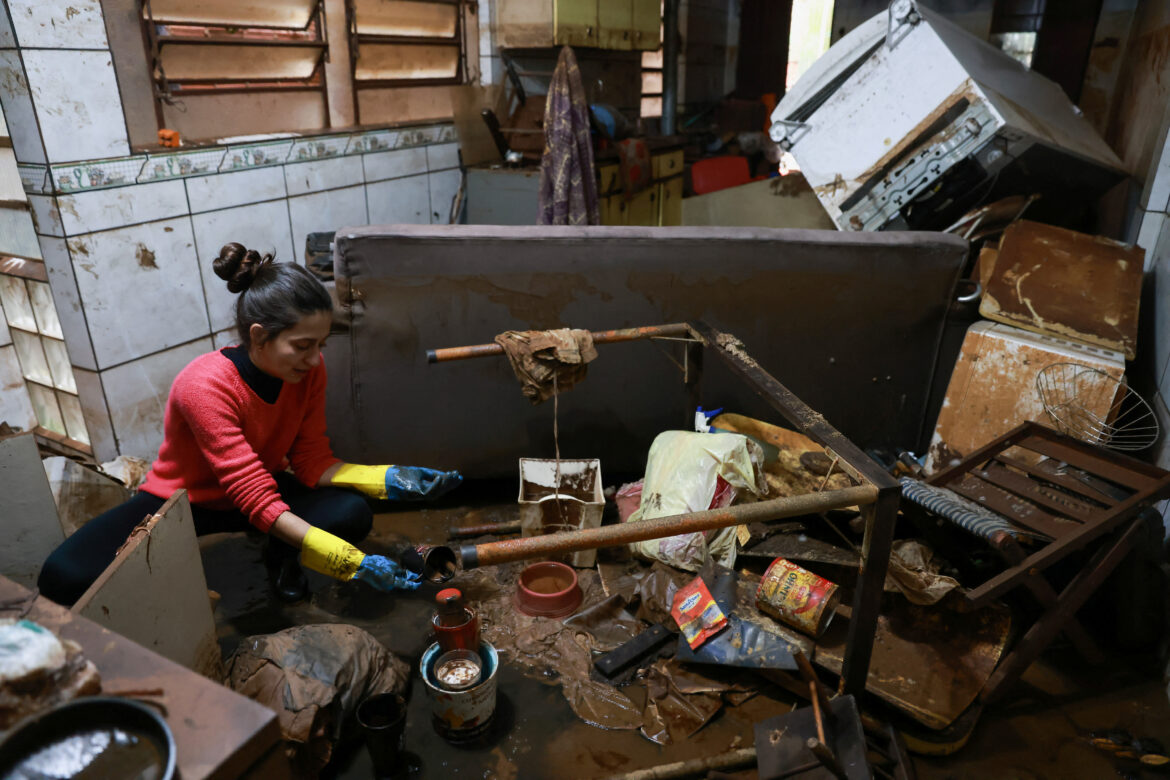
One such person coming back was Joyce Fauth Correa, who burst into tears as she entered her home in the neighborhood of Navegantes, armed with rubber gloves and waders.
Floodwaters, which she said had come up to her shoulders, have now receded to a thick layer of mud over the whole house.
“You see everything you’ve achieved, that you’ve fought [to have], all your history, go to waste.”
—Reuters