

 Facundo Iglesia
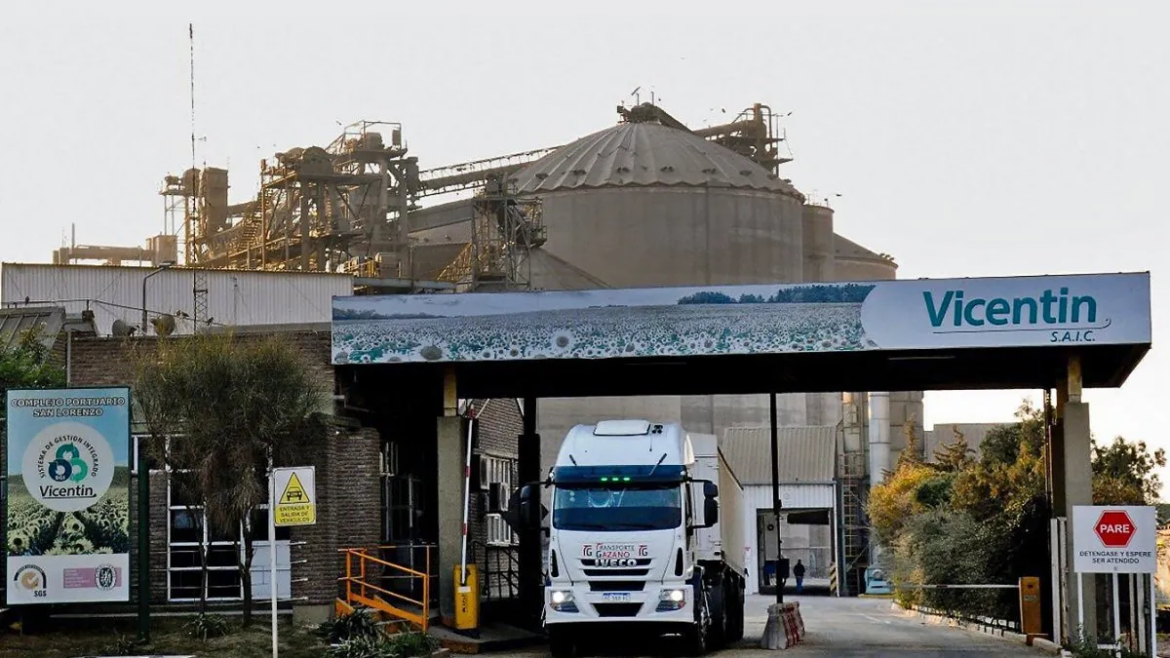
An investor group bought the US$447-million debt Vicentin, Argentina’s largest grain export company, had with multiple international banks. The move opens the door for the group to take control of the company.
Vicentin made headlines in 2020 when then-President Alberto Fernández announced its expropriation after the company defaulted on its debt. However, after a court blocked the deal, the government ultimately backed down and did not take over the company.
The beleaguered company is under pre-bankruptcy reorganization proceedings in the Santa Fe Supreme Court. The company that bought the debt, CIMA Group, is led by Esteban Antonio Nofal, a director of Torneos y Competencias, which holds the rights to broadcast several football tournaments.
Founded in 1929, Vicentin has shares in 20 corporations, including cereal and oilseed plants, a biodiesel production division, a textile division, and a grape juice concentrate factory, among others.
Vicentin’s largest single creditor was the state-owned Banco Nación which, when it defaulted in 2019, was owed US$300 million. According to Javier Ortega, a lawyer who acted as a legal advisor when the government audited the company before the failed expropriation, there was political complicity in the credits. “During the last month before [Vicentin] announced their financial stress, loans were given at the rate of one per day — including weekends.”
The debt paid by CIMA was held by eight international financial institutions, some of them linked with Wall Street — IFC, FMO, ING, Rabobank, MUFG, SMBC, and Natixis. Media reported that CIMA did not pay full price for the debt. Ortega called CIMA’s participation “surprising.” According to Ortega, CIMA is a group known for making risk investments, “specialized buying companies in crisis to pay the cheapest price possible in hopes that, in an alliance with another actor, can aspire to participate in the cramdown.”
In Argentine law, a cramdown happens when the pre-bankruptcy reorganization proceedings fail. Then, any actor can enter the proceeding, propose a payment schedule, and, if two-thirds of the creditors agree, take over the company.
In a communiqué, CIMA said it has initiated “conversations with various stakeholders in the process, including the Grassi Group, to explore their participation in an eventual cramdown.”
Ortega told the Herald that the real fight is to see who will keep Renova, the largest soybean crushing plant in the world, of which Vicentin owns 50%. Renova is located on the banks of the Paraná River, next to a port. “Whoever keeps Renova will be the soybean-crushing leader in Argentina,” Ortega said. He added that Bunge-Viterra, who owns half of Renova, could be seeking to buy the other 50%.
Ortega said that in its later years, Vicentin turned from its productive activity toward financial businesses. When he first went to Vicentin’s headquarters, he found a cabinet with 20 drawers with different labels representing different companies.
“There were 20 companies controlled by the same group of people and incurred in creative accounting by placing debts in the name of one or the other and lending to each other, which is against the Law of Companies,” he said.