

 Joaquín Rodríguez Freire
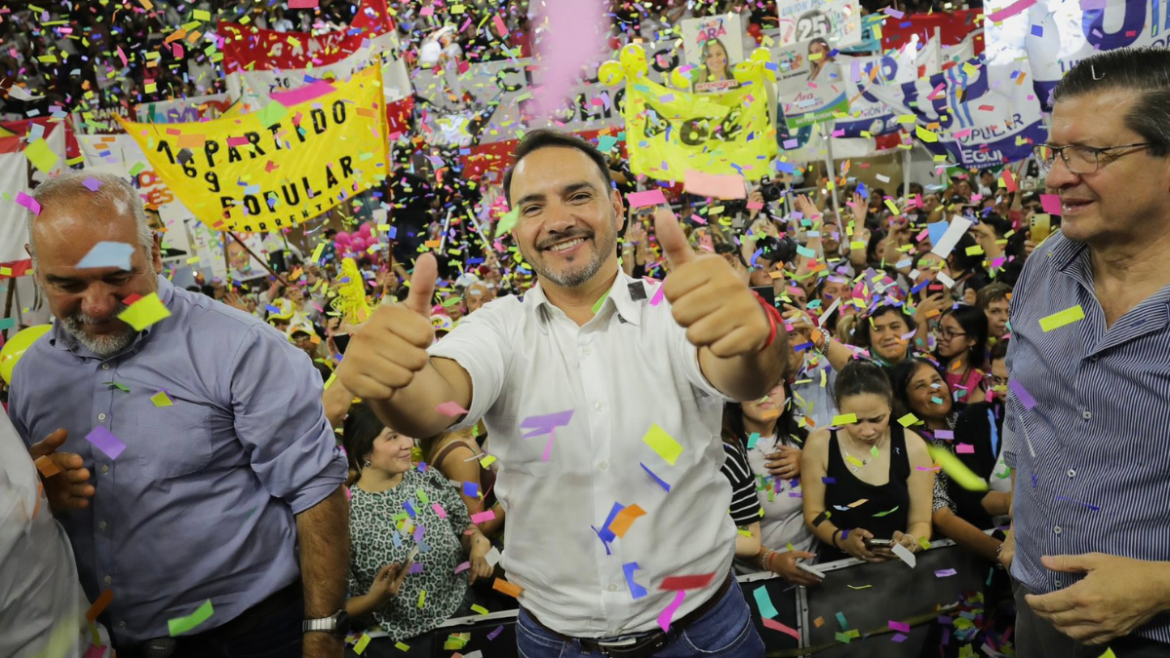
 Juan Pablo Valdés, the candidate backed by the ruling party in Corrientes, won Sunday’s elections and will become the province’s next governor. The mayor of Ituzaingó and brother of the current governor, Gustavo Valdés, secured victory in the first round, avoiding a runoff. In doing so, he guaranteed at least four more years of dominance by the Radical Civic Union (UCR) in provincial politics.
In a slow vote count, and with only partial results available, Valdés — running under the “Vamos Corrientes” banner — was taking 52% of the vote. His closest rival, Peronist candidate Martín Ascúa of “Limpiar Corrientes,” trailed with 21%. Ricardo Colombi of “Encuentro por Corrientes” placed third with 16%, while Lisandro Almirón, representing Javier Milei’s “La Libertad Avanza” (LLA), came in fourth with 10%. The other three competing forces were left far behind.
Meanwhile, national political tensions flared again, as former president Mauricio Macri clashed with Patricia Bullrich over Macri’s decision to align the PRO with LLA during the campaign.
Inside the Radical Party’s headquarters, celebrations started early. Among those who traveled to Corrientes were UCR governors Alfredo Cornejo (Mendoza) and Leandro Zdero (Chaco). There were also online congratulations from members of the newly formed Provincias Unidas coalition, including Maximiliano Pullaro and Juan Schiaretti. What stood out, however, was the absence of the bloc’s main leaders, who had been present only days earlier at the campaign’s closing rally.
By late evening, despite delays and uncertainty in the official count, Radical Party leaders declared victory based on numbers from their own “witness tables.” At around 10 p.m., the Valdés brothers, together with Zdero and Cornejo, walked from the Governor’s Office to the UCR’s Provincial Committee, celebrating their win in unity. They later joined a caravan headed to the capital’s port, where festivities spilled into the streets.
The race had been expected to be close. Although the UCR was seen as the favorite, the fatigue of a long-standing administration and the constitutional bar preventing Gustavo Valdés from seeking a third term seemed to open the door for the opposition. But Peronists, libertarians, and the Colombi faction — whose leader governed Corrientes for three terms — split the opposition vote, leaving the Radical Party with a decisive victory.
Another win for provincial ruling parties
The outcome also mirrored a broader trend in the 2025 election cycle: the repeated victories of provincial ruling parties. Santa Fe, Misiones, Chaco, San Luis, Salta, Formosa, and Jujuy all followed that pattern, with the only exception being Buenos Aires City (CABA), where LLA prevailed and Jorge Macri’s PRO fell to third place, even behind Peronism.
Governor Gustavo Valdés cast his vote shortly after 10 a.m. at the Domingo Faustino Sarmiento School in the provincial capital. Speaking to the press, he described the contest as “the dirtiest campaign I can remember.”
He also referred to violent incidents during LLA’s closing rally, when Karina Milei and Martín Menem visited the province, calling them “regrettable acts of violence that Argentina is experiencing” and stressing that “we had never seen such situations in Corrientes.”
Elections and the ANDIS scandal
This election was also the first since the corruption scandal at the National Disability Agency (ANDIS), exposed by its former head Diego Spagnuolo, which implicated senior members of the libertarian government. For that reason, the performance of LLA’s Lisandro Almirón drew particular public attention. But despite tying his candidacy closely to Milei’s brand, the national deputy finished fourth of seven, last among the major contenders.
It remains unclear whether the ANDIS scandal affected his showing. Pre-election polls had consistently placed Almirón at the bottom of the main pack. When casting his vote in downtown Corrientes around noon, he handed out copies of Argentina’s National Constitution to poll workers and election officials. He praised Juan Bautista Alberdi and criticized the provincial electoral system as “not transparent.” He also lamented the absence of a candidates’ debate before the vote.
The Peronist camp, meanwhile, raised suspicions about the vote count, criticizing it as disorderly. They had already gone to court beforehand to request information about electoral procedures but received no response. It remains to be seen what steps the party will take in the coming days.
Beyond the provincial contest, the UCR and its allies also scored victories in key cities such as Corrientes, Mercedes, and even Paso de los Libres — where Ascúa himself is mayor. Beginning in December, Gustavo Valdés will take up a seat in the provincial Senate. One open question is whether he will seek to lead the UCR at the national level, perhaps with bigger ambitions in mind. He is currently at odds with the party’s president, Senator Martín Lousteau.