

 Amy Booth
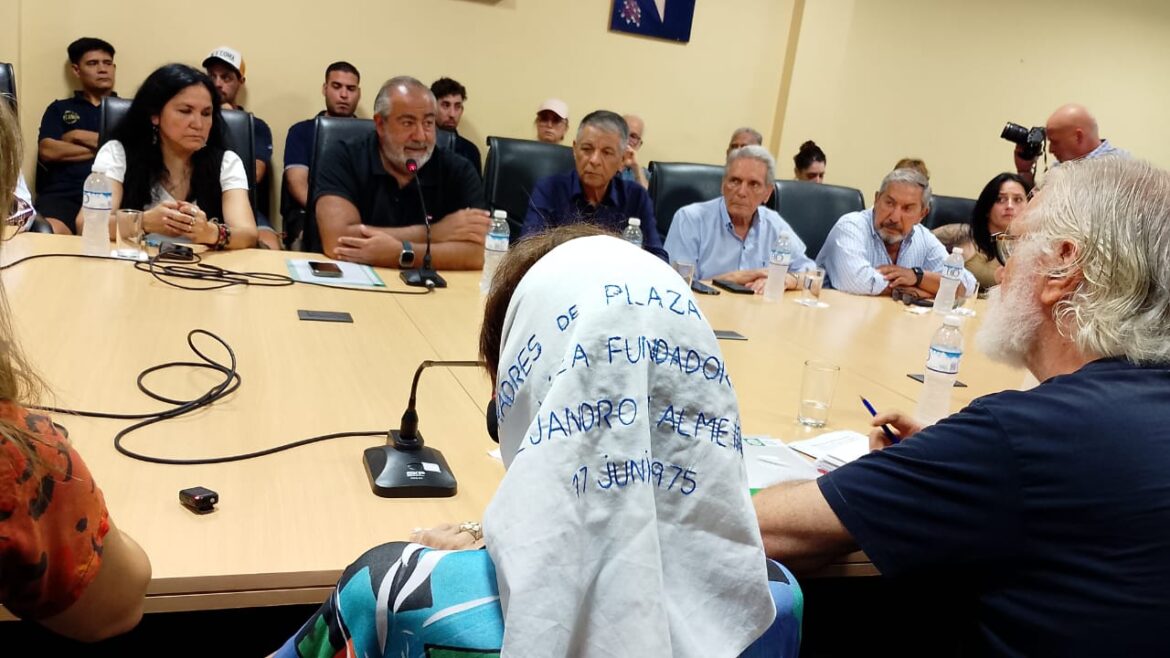
 Argentina’s main trade union federation voiced its support for human rights workers during a meeting with Mother of Plaza de Mayo Taty Almeida and other rights defenders on Wednesday.
The gathering at the headquarters of the General Confederation of Labor (CGT, by its Spanish initials) came ahead of a series of major marches that will protest Milei administration policies over the coming weeks.
The marches will stake out social demands and reject the president’s stances after he equated being gay with child abuse and claimed that femicide valued women’s lives over men’s during his speech at the 2025 Davos World Economic Forum meeting.
“It’s shameful that we have a president who wants to trash memory, truth and justice,” said Mother of Plaza de Mayo Taty Almeida, 94. She addressed “todos, todas y todes,” (everybody), using the gender-neutral form that Milei and his allies have rejected.
Sitting opposite the CGT’s leadership trio, Héctor Daer, Carlos Acuña, and Octavio Argüello, Almeida called on Argentina’s labor and human rights movements to be “more united than ever.”
She called on the CGT to support a march planned for this Saturday, when LGBTQIA+ organizations, feminist groups, and a broad range of other social movements plan to march in rejection of President Javier Milei’s Davos comments. The government presented a bill to eliminate the crime of femicide, as differentiated from homicide, after Milei’s speech.
“Milei’s speech in Davos crossed all the lines,” said Maia Volcovinsky, human rights secretary at the CGT. “In Argentina, reality always outdoes fiction.”
The women’s movement will march on March 8, for international women’s day. On March 24, Argentina marches for memory, truth and justice, to commemorate the 30,000 victims of the last dictatorship.
Alongside Almeida sat relatives of the disappeared. Mabel Careaga is the daughter of Esther Ballestrino, a founding member of the Mothers of Plaza de Mayo who was murdered by the dictatorship after being kidnapped in 1977. “The overwhelming majority of the disappeared were workers,” Careaga pointed out.
Argentina’s human rights secretariat has been cut to the bone by waves of layoffs since Milei took office. At least 400 workers were laid off in December, meaning that some key memorial sites may no longer have the minimum staffing needed to function. Some learned that they had been laid off over New Year when police stationed outside their offices told them they weren’t allowed in, union representatives on the scene told the Herald.
Milei has previously made denialist statements about the dictatorship, such as disputing the number of people who were disappeared. His Vice President, Victoria Villarruel, surged to prominence as a denialist campaigner.
“We have to be together and support each other,” Daer said. “We repeat our big call-out from last March 24, and you’ll find us in the streets with you.”